How to Create a Study Environment for High School Students
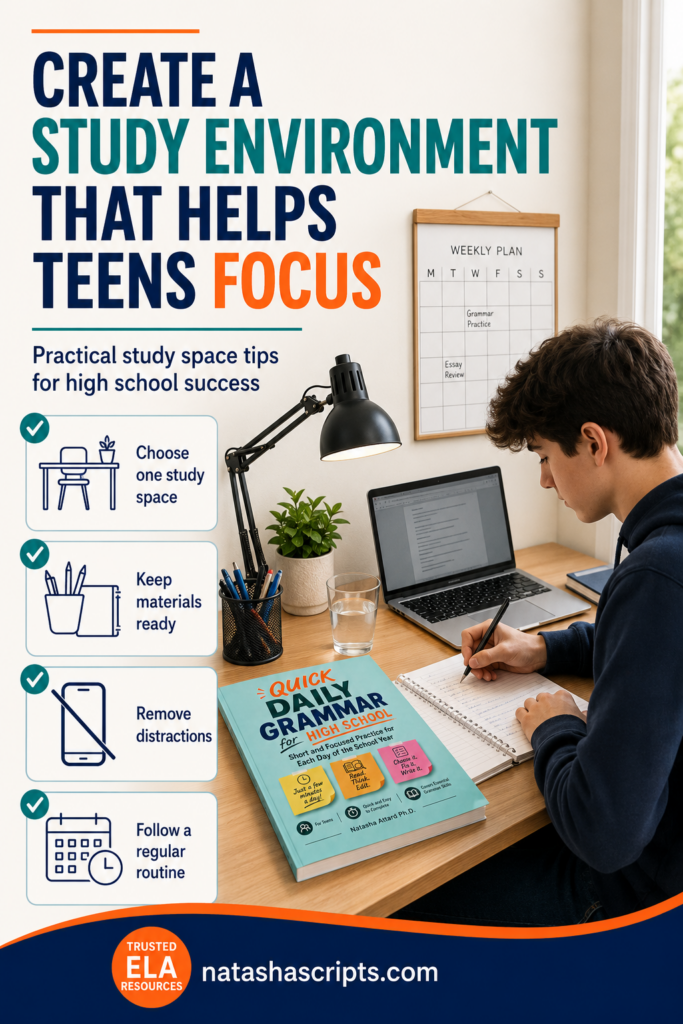
High school students often study wherever they happen to land at the end of the day: on a bed, at a kitchen counter, in front of the television, or at a desk cluttered with books, papers, and anything else that has accumulated over time. This is understandable. For many teenagers, where they study is simply a matter of convenience rather than something they see as influencing the quality of their learning. They often assume that if they are motivated enough, they can study effectively almost anywhere. In reality, the environment can make it much easier or much harder to stay focused.
For teachers, tutors, and homeschool parents, helping a teenager set up a consistent, functional study space is one of the more practical ways to support independent work habits. It does not require a dedicated room, expensive furniture, or a perfectly quiet house. It simply requires some deliberate attention to the conditions that make focused work easier or harder.
Prefer a quick overview? Jump directly to the Quick Reference Guide .
Why the Physical Space Matters
A consistent study space helps reduce unnecessary distractions and makes it easier for students to settle into focused work. When students regularly study in the same place, they begin to associate that environment with concentration and learning. By contrast, spaces that are usually used for sleeping, watching television, gaming, or scrolling through a phone naturally compete for a student’s attention. A teenager trying to complete homework while sitting on the same bed where they relax each evening is likely to find it harder to stay focused.
This does not mean every student needs a private office or a perfectly quiet room. Many teenagers work successfully in shared spaces with family members nearby. What matters more is having a consistent place that is set up for studying and used for that purpose each day. Over time, returning to the same workspace each day helps students settle into their work more quickly and maintain their focus for longer.
A consistent study space helps reduce unnecessary distractions and makes it easier for students to settle into focused work.
Choosing and Preparing the Right Location
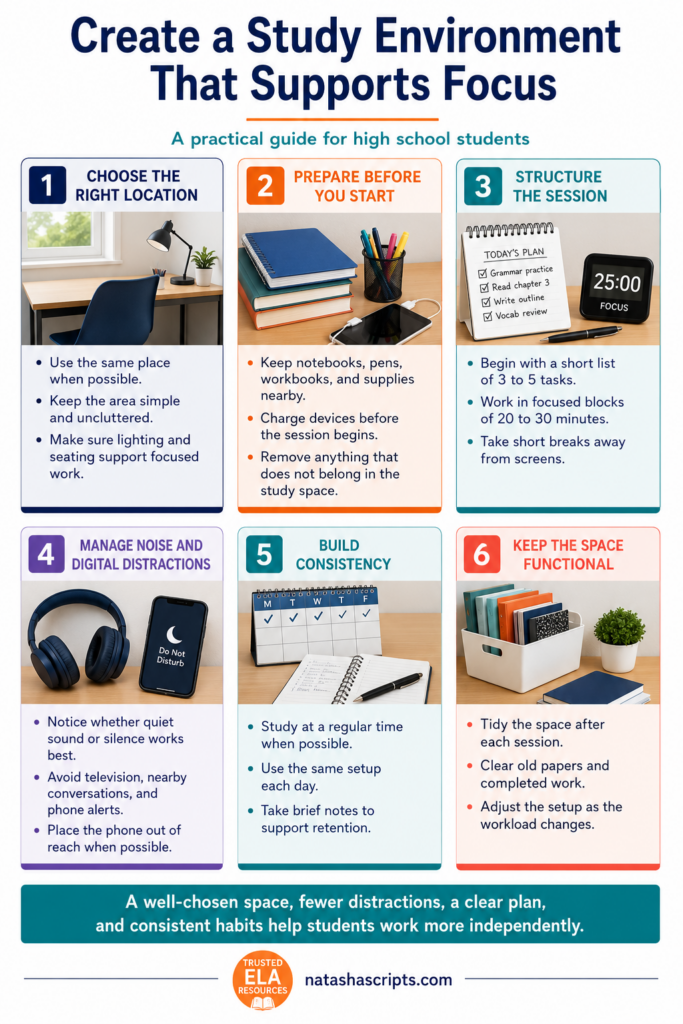
A good study space begins with choosing a location that can be used consistently and kept reasonably free from distractions. For many students, this might be a desk in a bedroom, a corner of the dining room, or a small workspace in another part of the house. The location does not need to be large or elaborate. What matters most is that it can be set up the same way each time and allows the student to work for an extended period without frequent interruptions.
Lighting is another important consideration. Natural light is ideal when it is available, but any well-lit space can work. The goal is simply to provide enough light to read and write comfortably without creating glare on a screen or page. Students who regularly work in dim lighting or with poor screen positioning may experience unnecessary eye strain, making it more difficult to stay focused during longer study sessions.
Seating also plays a role in maintaining concentration. Studying while lying on a bed or reclining on a couch may feel comfortable at first, but those positions often make it harder to stay alert and focused. An upright chair and a work surface at a comfortable height provide better support for longer periods of reading, writing, and computer work. Although students may not always appreciate the difference at first, many find it easier to concentrate once they develop the habit of studying in a properly arranged workspace.
Reducing Obstacles Before the Study Session Begins
A surprising amount of study time can be lost before any learning actually begins. Students often sit down intending to work, only to spend the next several minutes looking for a notebook, finding a pen that works, locating the correct workbook, or charging a device. Although each task seems minor on its own, together they interrupt the start of a study session and make it easier for students to become distracted.
One simple way to avoid this is to keep frequently used materials together in the study space. Notebooks, pens, pencils, highlighters, calculators, dictionaries, and current textbooks or workbooks should all be within easy reach. Students following a structured program, such as Quick Daily Grammar for High School, benefit from keeping the workbook at their study space alongside the other materials they use regularly. When everything is already in place, students can begin working immediately instead of searching for what they need.
Digital materials deserve the same preparation. If a study session requires a laptop or tablet, it should be charged and ready to use before the session begins. Notifications from social media, messaging apps, and other non-essential apps should also be turned off. Better still, students should place their phones out of reach or in another room whenever possible. Every notification has the potential to interrupt concentration, making it harder to return to the task at hand. Removing those distractions before studying begins is usually much more effective than relying on willpower throughout the session.
Structuring the Session Itself
A productive study environment is about more than the physical space. It also includes having a clear plan for how the study session will unfold. Many high school students sit down with the general intention of “doing homework” and continue working until they feel finished or lose motivation. A study session is usually more productive when it has a clear starting point, a manageable list of tasks, and a planned finishing point.
One simple strategy is to begin each study session by writing a short list of what needs to be accomplished. The list does not need to be lengthy. Three to five specific tasks are usually enough. Having a clear plan turns the session into a series of manageable steps, making it easier to get started and maintain momentum. It also gives students a clear sense of when they have completed what they set out to do.
For longer or more demanding tasks, dividing the session into timed work periods can help students maintain their concentration. Many students find that working for twenty to thirty minutes, followed by a five- to ten-minute break, is more effective than trying to study continuously for an hour or more. During the break, it is best to choose an activity that provides a genuine mental pause, such as standing up, stretching, or getting a drink of water. Checking a phone or scrolling through social media often makes it more difficult to return to focused work.
If your student struggles to manage larger assignments, you may also find it helpful to read our related article on planning a long writing project without falling behind. Breaking a major assignment into smaller, manageable steps complements the structured study sessions described here and helps students make steady progress without becoming overwhelmed.
Managing Noise and Digital Distraction
There is no single rule about background noise that works for every student. Some high school students are able to concentrate with quiet instrumental music or the gentle sounds of everyday activity around them. Others find that they work best in complete silence. Encouraging students to notice how different environments affect their concentration can help them make better choices about where and how they study, rather than simply choosing whatever feels most comfortable.
Some types of noise, however, tend to be distracting for almost everyone. A television playing in the background, nearby conversations, or the repeated alerts of a phone can easily interrupt a student’s concentration. Even brief interruptions can make it more difficult to regain focus and continue working effectively. Whenever possible, it is better to arrange the study space so these distractions are reduced or removed before the study session begins rather than expecting students to work through them.
Building Consistency Over Time
The benefits of a well-organized study environment become more noticeable over time. A student who studies at the same desk, around the same time each day, with materials arranged in the same way gradually begins to associate that space with focused work. As the routine becomes familiar, it often becomes easier to settle into studying and remain engaged throughout the session.
This is one reason why consistency matters just as much as the physical setup itself. Teachers, tutors, and homeschool parents can support independent study habits by encouraging students to follow a regular study schedule rather than deciding each day when they might fit their work in. When students know that a particular time is consistently set aside for studying, they are less likely to delay getting started or spend time deciding when to begin.
A consistent study routine also creates opportunities to develop other productive habits. One of these is taking brief notes while studying rather than simply completing an assignment and moving on. Recording key ideas, grammar rules, writing techniques, or unfamiliar vocabulary encourages students to process what they are learning more actively, which can strengthen long-term retention. If you would like to explore this strategy further, you may also find our related article, Why Note-Taking Matters During ELA Lessons (And How to Help Your Teen Do It Well), helpful.
Keeping the Space Functional as the Year Progresses
Even a well-organized study space can gradually become less effective if it is not maintained. Papers accumulate, completed assignments are left on the desk, and everyday items slowly replace the materials needed for studying. Students often do not notice these changes until the workspace has become cluttered enough to interfere with their concentration. Spending a minute or two at the end of each study session putting materials away and clearing the work surface helps keep the space ready for the next session without the need for a major clean-up later.
As the school year progresses, it is also worth reviewing whether the study space still meets the student’s needs. New subjects, more demanding assignments, or additional resources may require some adjustments. For example, if a student begins using a structured program such as High School Grammar Grades 9–10, keeping that workbook readily available alongside other frequently used materials makes it easier to incorporate it into a consistent study routine.
Ultimately, an effective study environment is about much more than having a tidy desk. A consistent workspace, well-organized materials, fewer distractions, and a predictable study routine all make it easier for students to concentrate and work independently. While no study space will be perfect every day, thoughtful preparation and consistent habits can help students get more from every study session throughout the high school years.
If you’re looking for additional classroom-ready resources, you can also explore our free high school ELA lessons and worksheets covering grammar, writing, spelling, and vocabulary on the Free ELA Resources page.
Quick Reference Guide