Why I Include Interactive Quiz Games in My ELA Books
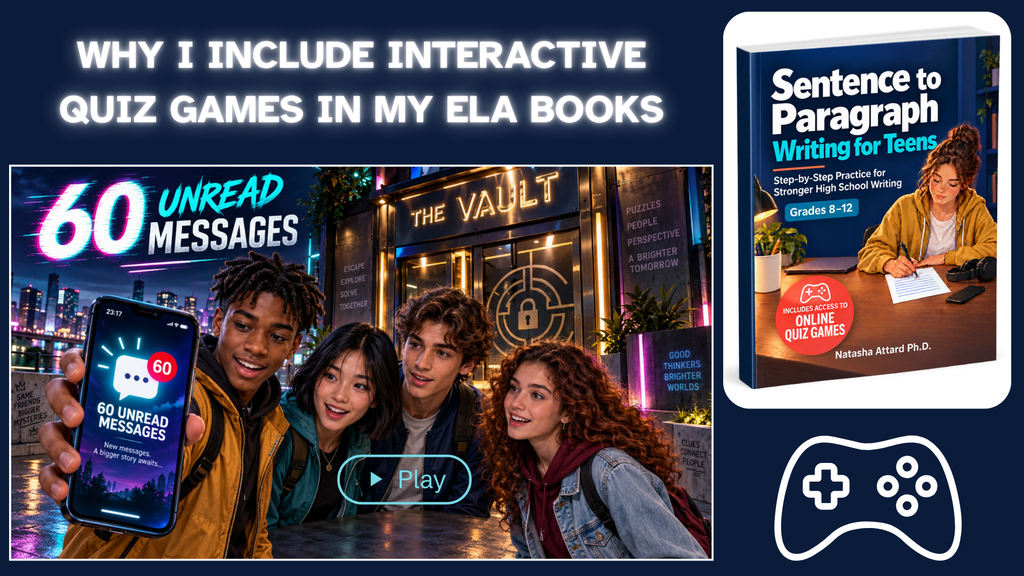
When I create an ELA workbook, I think carefully about the different ways students will meet, practice, and apply each skill. Written activities are essential, particularly when students are learning to spell unfamiliar words, use vocabulary in context, analyze grammar, or improve their own writing. However, students also need variety. Returning to the same material through an interactive game gives them another opportunity to use what they have learned while enjoying a very different experience.
The games in my books are connected directly with the lessons students have completed. In a spelling game, for example, they may need to choose an accurate spelling, use a spelling word correctly in context, identify an error, or apply a rule or pattern introduced in the workbook. Grammar and writing games require the same kind of careful thinking, with questions based on the skills taught in the relevant sections of each book.
Once the game begins, however, the activity does not feel like an extension of a worksheet. Students may be repairing a time machine, trying to release a trapped ghost, completing a secret-agent mission, or solving another problem within the story. The questions remain educational, but the storyline gives students a different reason to continue. They want to discover what happens next.
I design these games with teenage students in mind. The stories, settings, and challenges are intended to feel appropriate for their age without becoming too serious or complicated. They provide genuine spelling, vocabulary, grammar, and writing practice, while also giving students the pleasure of entering a story and working toward its conclusion.
Once the game begins, however, the activity does not feel like an extension of a worksheet. Students may be repairing a time machine, trying to release a trapped ghost, completing a secret-agent mission, or solving another problem within the story. The questions remain educational, but the storyline gives students a different reason to continue. They want to discover what happens next.
What Students Practice While They Play
The games return students to material they have already studied, but the questions ask them to do something with that knowledge. They may need to recall a word, examine a sentence, recognize an error, or choose the answer that conveys the intended meaning. Each decision provides another opportunity to retrieve and apply the skill.
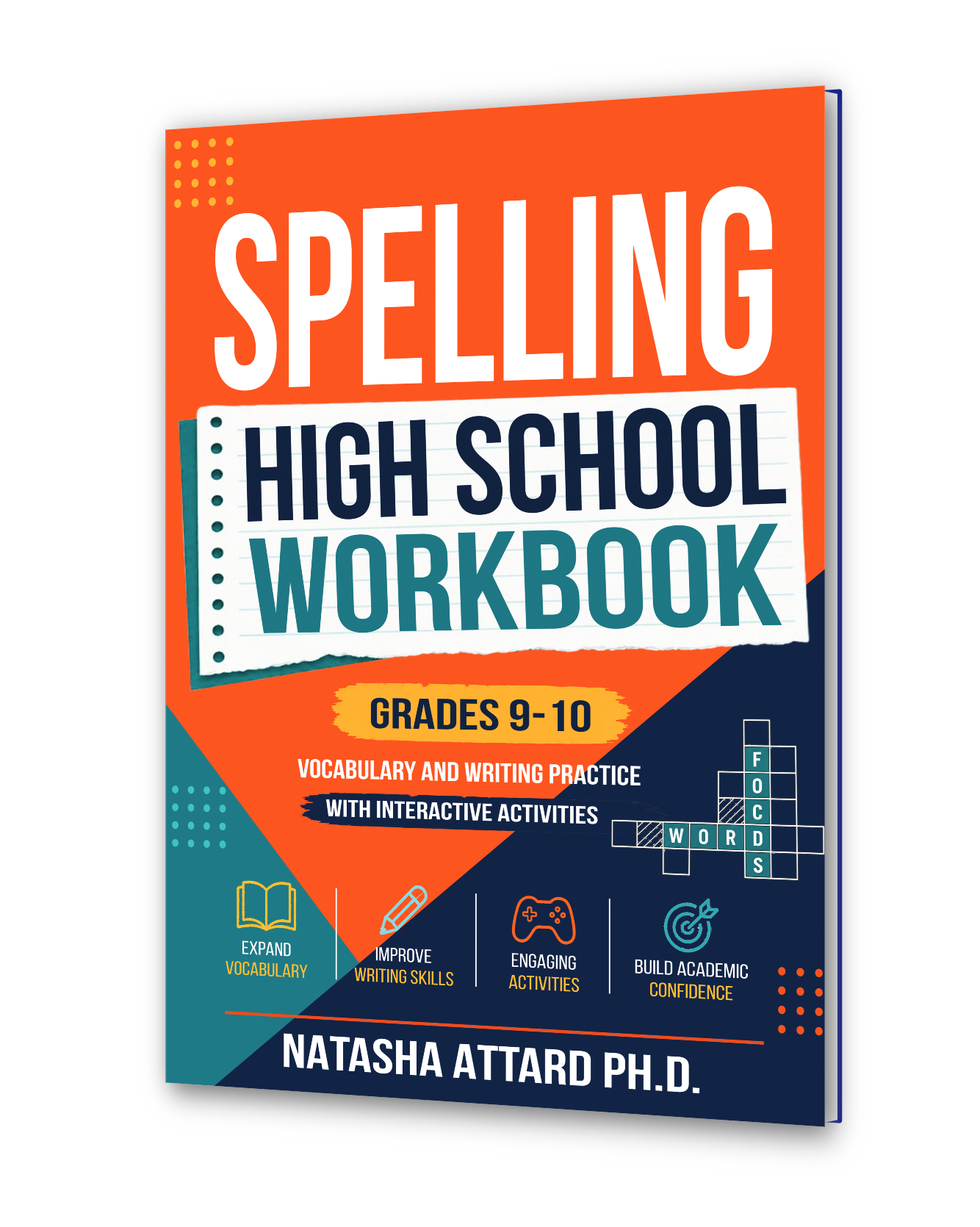
In Spelling High School Workbook Grades 9–10, students study words through definitions, syllable and whole-word practice, model sentences, reading passages, and written application. The games revisit several parts of this work. Students may need to spell a target word correctly, select the word that fits a particular context, or identify and correct an error by drawing on a pattern they studied in the workbook. The vocabulary questions are important because accurate spelling alone does not show that a student understands how the word is used.
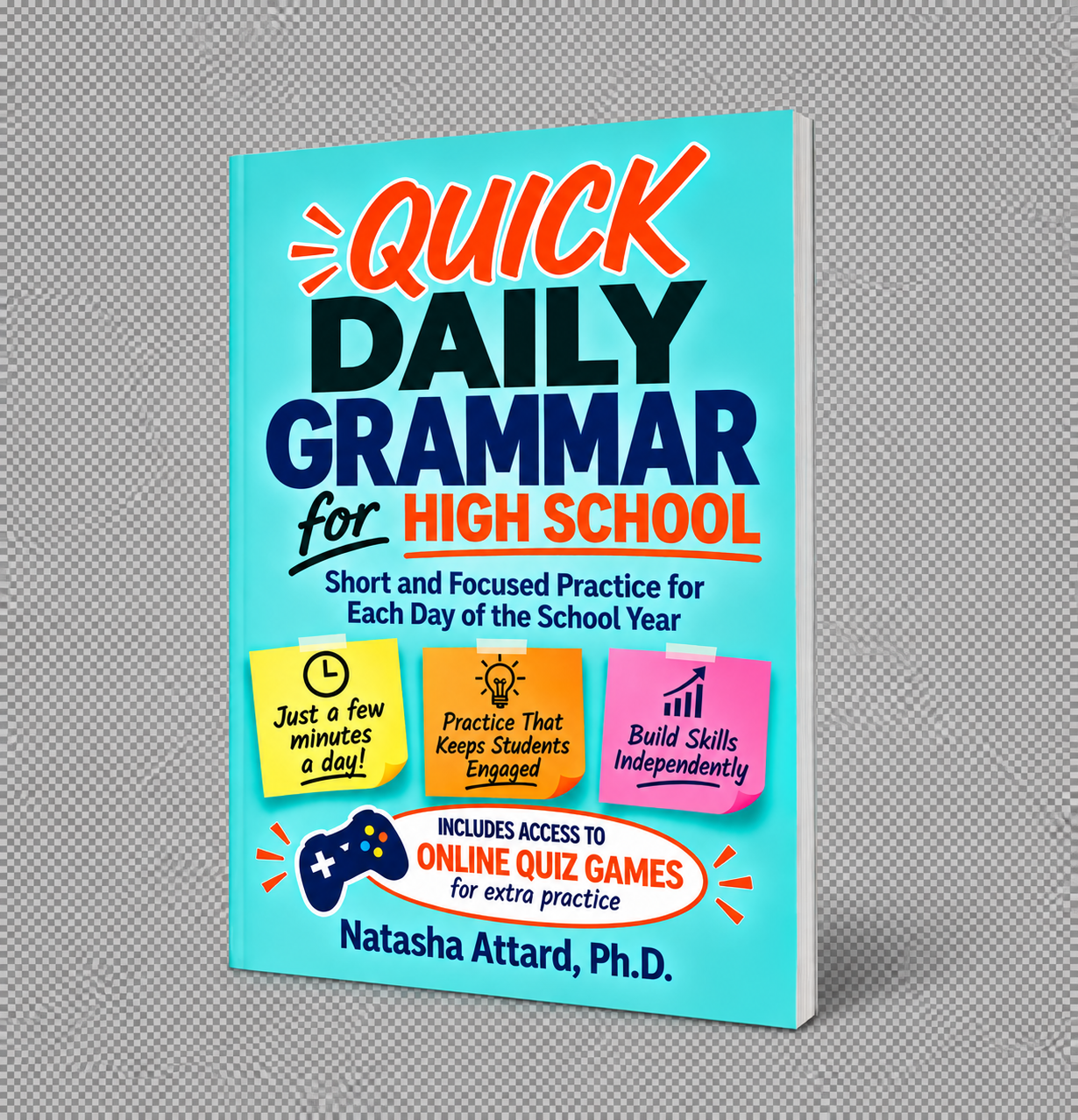
The games in Quick Daily Grammar for High School review the grammar and editing skills covered during the relevant six-week period. Depending on the game, students work with phrases and clauses, sentence fragments, run-on sentences, agreement, verb forms, punctuation, sentence structure, modifiers, and other areas of grammar. They must examine the sentence and apply the appropriate rule before they can continue.
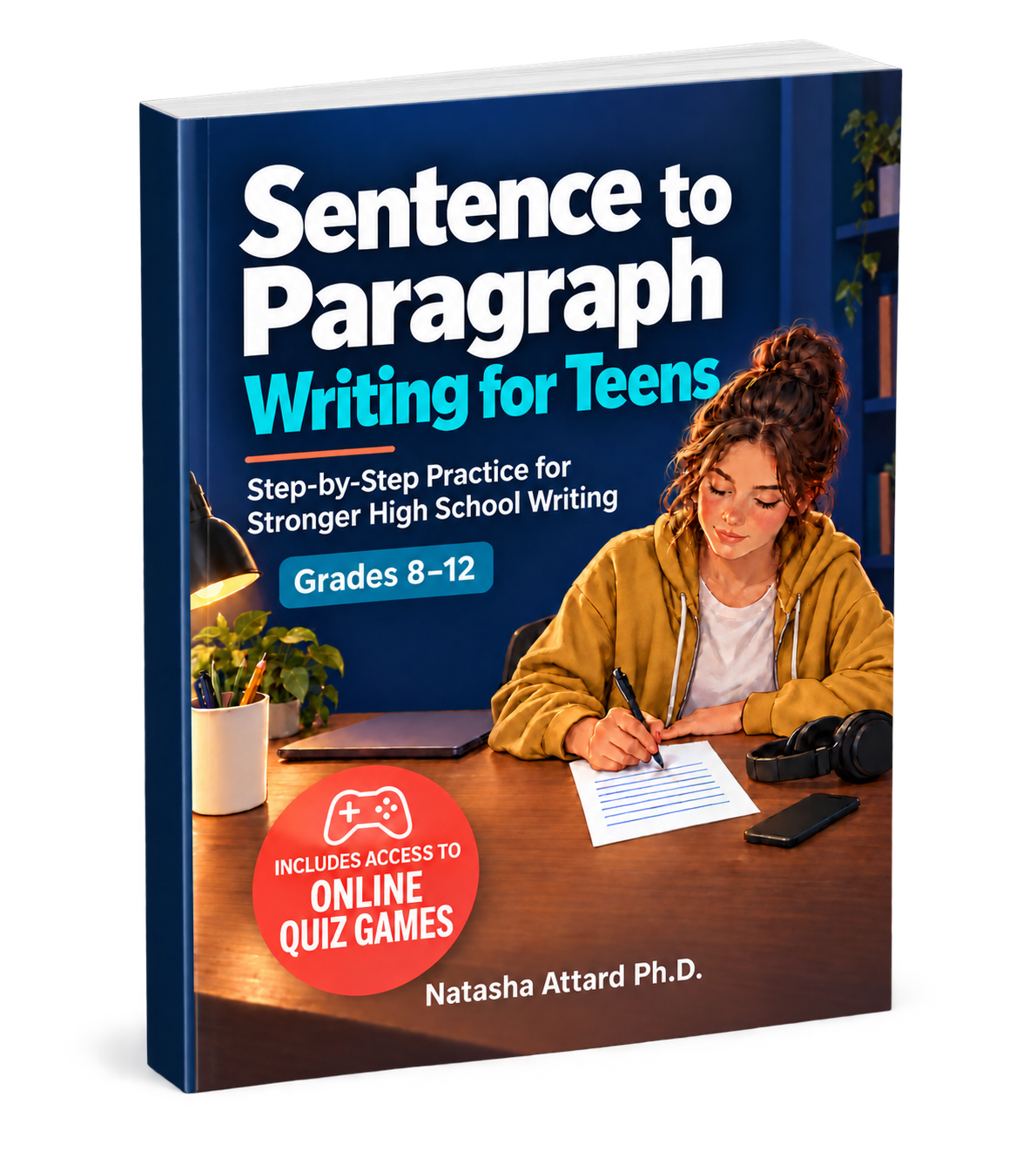
In Sentence to Paragraph Writing for Teens, the questions involve decisions students make while constructing and revising a paragraph. They may need to identify a clear focus, choose relevant support, order ideas, select an effective connection, remove repetition, or repair an unclear sentence. The game format allows them to practice one decision at a time before they apply the complete process in their own paragraph writing.
The form of practice changes from one book to another because spelling, grammar, and paragraph writing require different kinds of thinking. What remains consistent is the connection with the instruction. Students have already met the concept in the book. The game gives them a new setting in which to recall it, examine it, and use it.
When Review Becomes Part of a Story
A set of quiz questions can provide useful review, but a storyline changes the student’s reason for continuing. There is a problem to solve, a place to escape from, or a mission to complete. Each answer moves the story forward and reveals what happens next.
I use stories that are appropriate for teenagers and varied enough to suit different interests. A student might travel through time, investigate a mysterious room, follow clues, repair a damaged system, or make decisions under the pressure of a fictional deadline. The settings add suspense, humor, or curiosity without making the instructions difficult to follow.
The educational questions remain closely connected with the book. However, once students become involved in the story, their attention often shifts toward completing the challenge. They continue retrieving spelling words, examining grammar, or making writing decisions, but the practice now forms part of a larger experience. For a short time, they may forget that they are reviewing material they have already studied.
Spelling Practice Inside Nine Different Adventures
I included nine online games and quizzes in Spelling High School Workbook Grades 9–10. Students access them at different points in the book after studying the relevant spelling and vocabulary words. The games return to those words through questions about spelling, meaning, contextual use, and error correction.
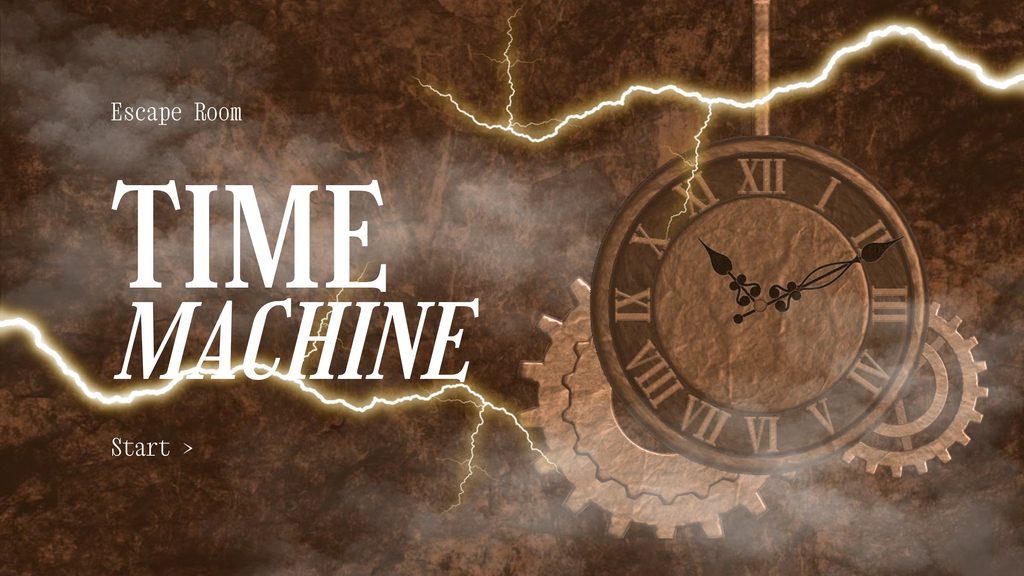
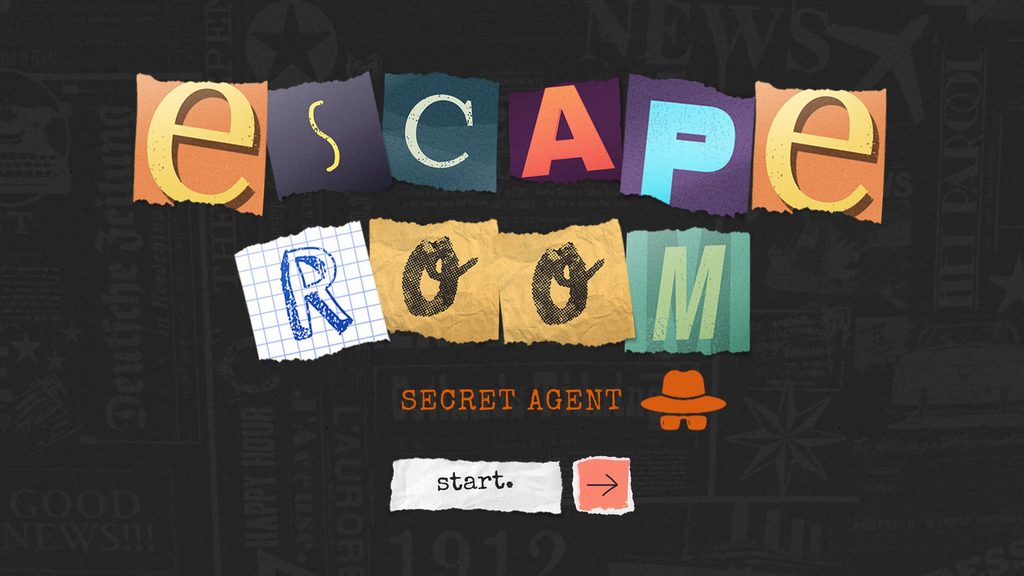
The Time Machine places students inside a time-themed escape room. The Trapped Ghost uses a darker mystery setting, while the Secret Agent Escape Room turns the review into a mission involving clues and challenges. The visual style and story change from one game to the next, giving students a different experience each time they reach an online activity.
Although the settings are fictional, the decisions students make are drawn from their workbook lessons. They may need to identify an accurately spelled word, choose the word that completes a sentence correctly, recognize how a word is being used, or correct an error. Rules and spelling patterns introduced in the book also appear within the questions.
This combination is important to me. The spelling words are not separated from their meanings or treated as letter sequences alone. Students continue working with the words as vocabulary and applying them inside sentences. The escape-room structure gives that practice a clear goal: each correct decision helps them move through the story and complete the challenge.

Grammar Review Through Missions and Challenges
Quick Daily Grammar for High School is divided into six six-week parts. Each part ends with review and self-assessment, and students can then enter an optional online game based on the grammar they have studied during those weeks. There are six games in total.
In ChatFix, students find a group chat in disorder and need to repair the messages, follow the correct sequence, and help the students finalize their plans for a party. As they work through the chat, they review parallel structure, prepositional and gerund phrases, subject-verb agreement, commas, and simple and compound sentences.
Murder on the Golden Wind takes students aboard a luxury train traveling through the frozen Siberian wilderness. They join Detective Vera Sokolova as she examines clues, interviews suspects, and investigates a murder connected with thirty years of secrets. The grammar challenges include compound-complex sentences, modal verbs, agreement with indefinite pronouns, and appositive phrases.
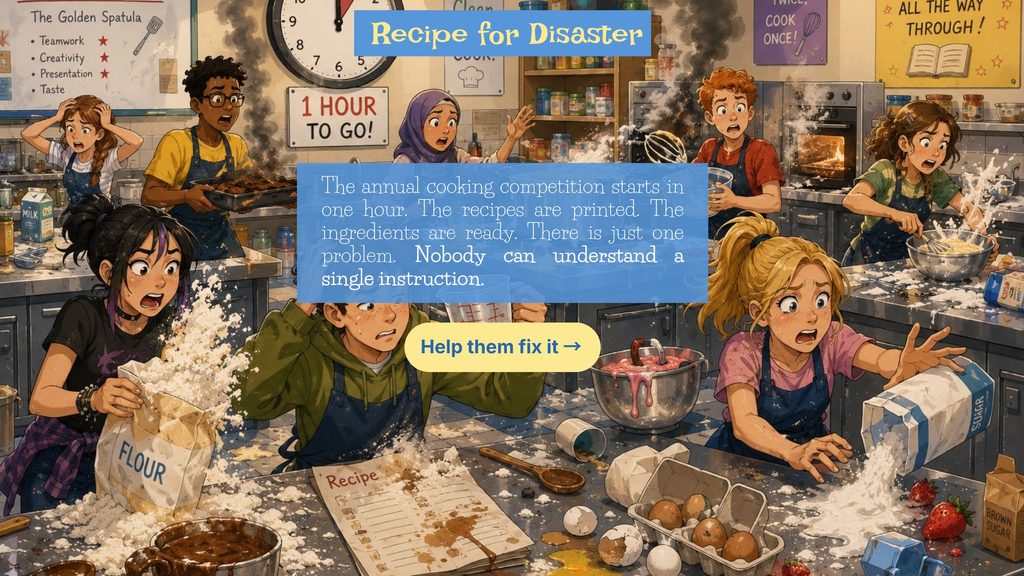
In Recipe for Disaster, grammar errors have caused confusion throughout a school cooking competition. Recipes, notes, and kitchen instructions need to be corrected before the students can prepare their three-course menu. The game reviews apostrophes, sentence variety, dangling modifiers, quotation marks, and colons.
The grammar work fits naturally into each situation. An unclear message can disrupt the plans in a group chat. A detective needs to read statements and clues carefully. Poorly written kitchen instructions can create genuine confusion. The stories give students a reason to examine the language closely and apply the grammar they have practiced during the preceding weeks.


Practicing Paragraph Decisions Through a Story
Sentence to Paragraph Writing for Teens is organized into six parts, with an online game connected with each part. Students first complete the instruction and written practice in the book. The game then returns them to some of the decisions involved in building, developing, connecting, and revising a paragraph.
The Breakthrough Audition places students with a teenage band preparing for a performance that could change its future. Storm at Cedar Ridge takes them to a working ranch as a storm approaches, while Murder at Crow House brings them into a darker setting where they must follow the events surrounding a mystery.
Depending on the part of the book, students may need to identify a clear focus, select a suitable topic sentence, distinguish useful support from an irrelevant detail, organize ideas, choose an effective connection, or improve a weak sentence. Some questions ask them to recognize what is working. Others require them to repair a problem or choose the strongest revision.
Paragraph writing involves a series of connected decisions, and the games allow students to practice those decisions individually. The storyline gives each choice an immediate place within the challenge. Students are still examining focus, development, order, connection, and revision, but they are doing so while helping a band, preparing for a storm, or investigating what happened at Crow House.



Using the Games in the Classroom or at Home
I place each game after the section of the book that teaches the relevant skills. Students therefore enter the game with the knowledge they need to answer the questions. A teacher or homeschool parent can use it immediately after that section, save it for later review, or return to it before an assessment or extended writing task.
In a classroom, the game can be displayed for students to complete together, used with a small group, or assigned for individual review. At home, a student can play independently after completing the corresponding lessons. If an answer is incorrect, the student can return to the book, review the rule or example, and try again.
The games are optional and do not replace the instruction or written work. They provide another opportunity to retrieve and apply what students have studied, while giving them a change from the usual lesson format.
All the games are password protected. The access links, QR codes, and passwords are provided inside the relevant books, so the games are reserved for the students, teachers, tutors, and homeschool parents using those resources.
Learning Can Include Enjoyment
I include interactive games because students need repeated opportunities to use what they have learned. A different format can renew their attention, particularly after they have spent time reading explanations, completing written practice, and checking their work.
The stories also give students something to enjoy. They can enter an escape room, solve a mystery, complete a mission, help a band, or prepare for an approaching storm. During that time, spelling, grammar, vocabulary, and writing decisions become part of the challenge in front of them.
Direct instruction and written application remain at the center of each book. The games add another stage to the learning process, allowing students to review familiar material through action, choice, and story. That combination of learning and entertainment is why interactive games have become an important part of the ELA books I create.
