How to Help Middle School Students Connect Body Paragraphs to the Thesis
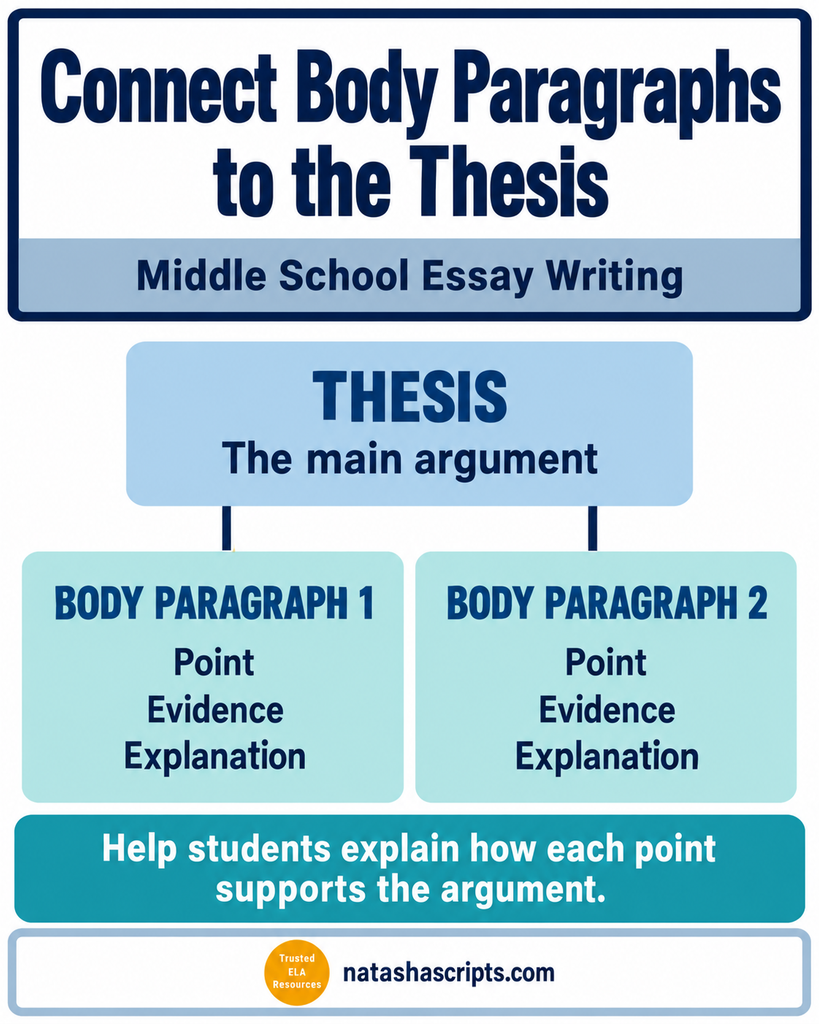
A middle school student can write a clear thesis statement and still produce body paragraphs that do very little to support it. Each paragraph may include a sensible topic sentence, relevant details, and complete sentences. Yet when you read the essay from beginning to end, the connection to the main argument is difficult to follow.
This can be frustrating for teachers and homeschool parents because the student appears to have included all the required parts. Often, the missing element is the explanation of how those parts work together. The student has presented information about the topic without showing how that information supports the position stated in the introduction.
Students in grades 6 through 8 need practice making these connections while planning, drafting, and revising. Three areas deserve particular attention: the point introduced in each topic sentence, the explanation that follows the evidence, and the relationship between consecutive paragraphs.
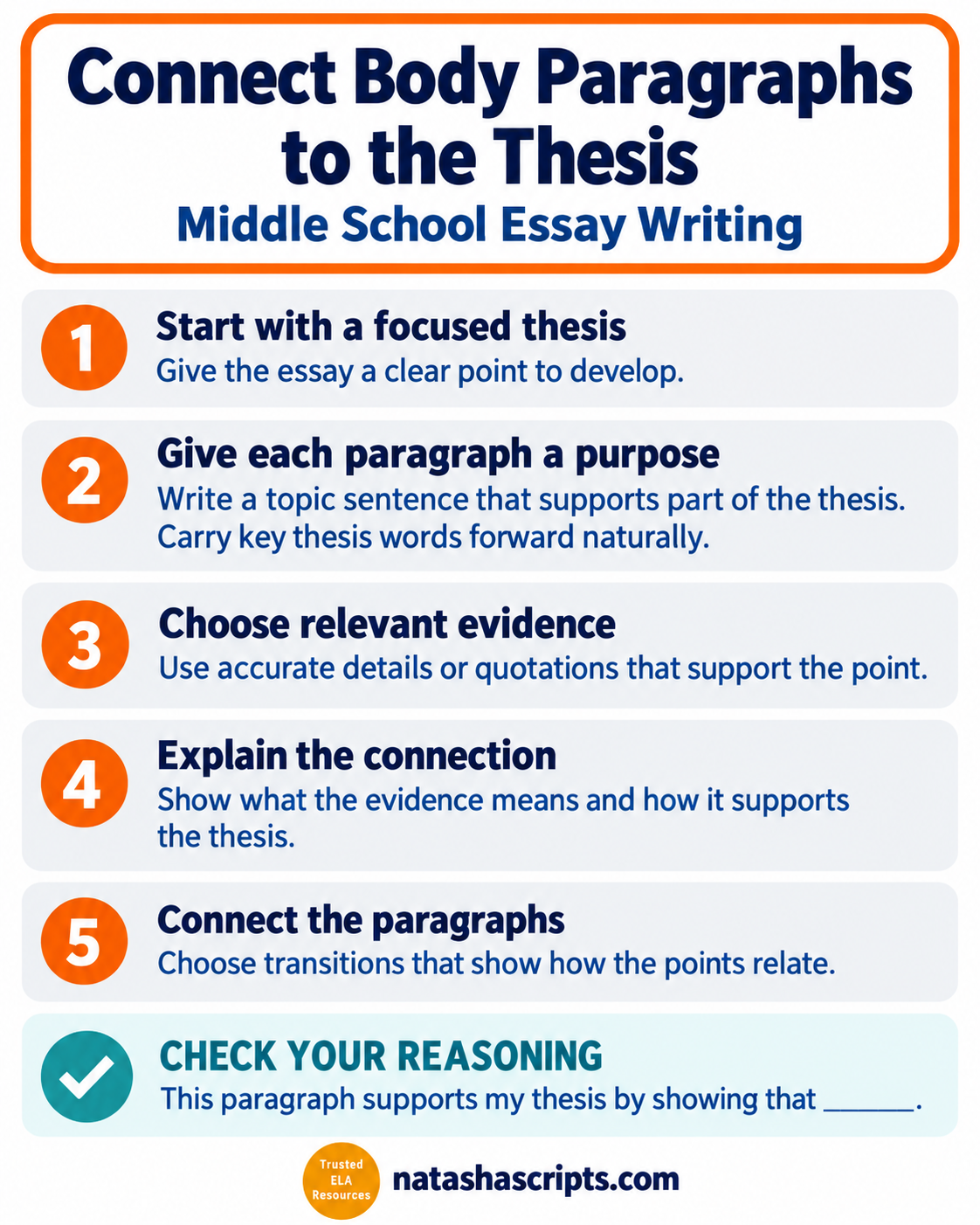
For a summary of how to connect body paragraphs to the thesis,
jump to the
Quick Reference Guide.
1. Begin With a Thesis That Gives the Essay Direction
Before examining the body paragraphs, check whether the thesis gives students a clear point to develop. A broad statement such as “Independent reading benefits students” gives little direction for the essay. Students need a more focused claim to help them decide what each body paragraph should develop.
A more focused thesis gives them something specific to support:
Middle schools should include regular independent reading time in English lessons because it gives students opportunities to practice reading and explore books that interest them.
This thesis identifies a position and two reasons the writer will develop. One body paragraph could explain the value of regular reading practice. Another could discuss how choosing books allows students to explore their interests.
If a student cannot explain what the essay is trying to establish, return to the thesis before asking them to revise individual paragraphs. The related article How to Write a Strong Thesis Statement in Middle School explains a process for developing that starting point.
2. Make Each Topic Sentence Support Part of the Thesis
A topic sentence should tell the reader what the paragraph will explain. In an argumentative essay, it should also introduce a point that helps support the thesis.
Compare these two openings:
General opening:
Students read books during English lessons.
More focused opening:
Setting aside time for independent reading during English lessons gives students regular opportunities to practice.
The first sentence describes a classroom activity. The second introduces a reason for including that activity regularly, supporting the position stated in the thesis.
A useful question to ask students is:
What does this paragraph help you show about your thesis?
If the student answers, “It is about independent reading,” ask them to be more specific. Does the paragraph explain the value of regular reading practice? Does it discuss opportunities to explore books? Does it address a concern about setting aside lesson time?
Once the student can explain the purpose of the paragraph aloud, help them express that point in the topic sentence.
The same check applies to essays about literature. A paragraph may describe a character’s actions accurately but still need a clear opening that explains what those actions reveal about the character. Students need to establish the point they will support before moving into plot details or quotations.
3. Carry Important Thesis Words Into the Paragraphs
Students sometimes lose sight of the thesis as soon as they begin drafting. Keeping a few important words or phrases visible can help them maintain their focus.
Ask students to underline the words or phrases that carry the main meaning of their thesis. In the independent-reading example, these might be:
- regular independent reading time
- practice reading
- books that interest them
Students can refer to these terms when writing their topic sentences and explanations. For example:
Choosing books that interest them allows students to explore subjects and stories beyond those selected for whole-class reading.
The phrase books that interest them connects the paragraph to one of the reasons stated in the thesis. The rest of the sentence introduces a point the student can develop with examples and explanation.
Repeating a key term can be useful. Students do not need to find a different word every time they refer to the same idea. However, the repeated wording must accompany a clear explanation. A paragraph can mention reading practice several times and still leave the reader unsure why schools should provide time for it.
Each body paragraph should develop a particular part of the thesis. Repeating the whole thesis at the beginning of every paragraph leaves the reader with the same statement instead of a developing argument.
4. Explain What the Evidence Shows
Including a relevant example or quotation is only part of developing a paragraph. Students also need to explain what the evidence shows and how it supports their point.
Consider this invented classroom example for a practice exercise:
During three English lessons, students spend ten minutes reading books they have selected. One student continues the same novel across all three sessions.
A writer could include this example and move straight to another one. However, the student still needs to explain how the example supports the point of the paragraph.
An explanation could follow:
Setting aside time in each lesson gives this student repeated opportunities to continue reading. This illustrates how scheduled independent reading can provide regular practice during the school week.
The explanation connects the example to the point of the paragraph and the thesis. It shows how lesson time provides opportunities for reading practice without claiming that the example proves an improvement in reading skills.
When working with actual research or a literary text, students should use accurate evidence from the source. Then ask:
- What does this detail show?
- How does it support the point of this paragraph?
- How does that point help support the thesis?
Students may find sentence starters such as “This suggests that…” or “This detail shows…” helpful while practicing. These are starting points, however. The important work comes after the opening phrase, when the student explains the connection.
Some examples need more than one sentence of explanation. Others can be discussed together. Avoid turning the process into a rule that every quotation must be followed by exactly one explanation sentence.
5. Show How the Paragraphs Work Together
Once each paragraph has a clear purpose, students can examine how the paragraphs relate to one another.
In the independent-reading essay, one paragraph might explain the value of regular reading practice. The next might discuss opportunities for students to explore books that interest them. Both support the thesis, but the reader still needs to understand the connection between them.
A general opening would be:
Another reason is that students can choose books they enjoy.
A more specific connection would be:
Regular independent reading gives students time to practice, while a choice of books allows them to explore subjects and stories that interest them.
This sentence refers to the previous point and introduces the next. It connects the opportunity for regular practice with a second reason for including independent reading: students can explore books that interest them.
Before students choose a transition, ask them to describe the relationship between the paragraphs. Does the next paragraph add another reason, explain a result, introduce a concern, or respond to an opposing view?
A brief planning conversation can help:
The previous paragraph explained ______.
This paragraph will explain ______.
Both support my thesis because ______.
Students do not need to include these sentences in the finished essay. They use them to clarify their thinking before choosing the wording of the transition.
If the student cannot explain how a paragraph supports the thesis, adding furthermore or in addition will not resolve the problem. They may need to change the focus of the paragraph, move the evidence, or reconsider whether the paragraph belongs in the essay.
6. Teach One Part of the Process at a Time
Students may find it difficult to manage the thesis, topic sentences, evidence, explanations, and transitions during one revision task. Short practice activities allow teachers and homeschool parents to focus on the area that needs attention.
Begin with topic sentences when students are struggling to give paragraphs a clear purpose. Provide a thesis and two possible paragraph openings. Ask students which opening supports the thesis more clearly and why. Then have them revise a general opening themselves.
When students include relevant evidence but leave its meaning unexplained, provide the thesis, paragraph point, and evidence. Ask them to write only the explanation. Discuss whether their sentences show what the evidence contributes to the argument.
Work on transitions once students can identify the purpose of each paragraph. Give them two paragraph summaries and ask them to explain the connection before writing a transition sentence.
Choose the starting point according to the student’s draft. A student with strong topic sentences may need most of the practice to focus on explaining evidence.
7. Use a Short Revision Check
During revision, have students place their thesis beside the draft so they can refer to it easily. Then examine one body paragraph at a time.
Ask them to:
- Underline the topic sentence. What part of the thesis does it support?
- Mark the evidence. Does it support the point introduced in this paragraph?
- Find the explanation. Where does the writer explain what the evidence shows?
- Check the connection. Can the reader see how this paragraph contributes to the main argument?
- Read into the next paragraph. Is the relationship between the two points clear?
A useful final task is to have students complete this sentence aloud:
This paragraph supports my thesis by showing that ______.
If the answer is clear but missing from the writing, the student has identified something to add. If they struggle to answer, discuss the paragraph’s purpose before correcting its wording.
This also makes feedback more specific. Instead of writing “Link back to your thesis,” you can ask, “How does this example show why schools should set aside time for independent reading?”
Supporting Sentence and Essay Writing Skills
Students may know what connection they want to make but struggle to express it in a sentence. Words such as because, although, and when give them ways to explain reasons, conditions, and contrasts. Practice with these sentence structures can support the explanations they write within paragraphs.
For further discussion, Why Understanding Clauses Improves Student Writing examines how students can apply clause knowledge when constructing and revising sentences.
Helping Students Check Their Own Reasoning
As students become more confident, ask them to explain a paragraph’s purpose before you offer suggestions. This gives you a clearer picture of what they understand and helps them identify the revision themselves.
A student who can state the connection orally may need help putting it into writing. A student who cannot yet explain the connection may need to reconsider the point or the evidence. Those difficulties call for different kinds of support.
Over several assignments, return to the same practical questions: What is this paragraph showing? What does the evidence contribute? How does it support the thesis?
Students can use those questions while drafting as well as during revision. When they learn to check the purpose of each paragraph, they are better prepared to decide what to include, what to explain, and what to leave out.
Find More Free ELA Resources
Explore free sample lessons, worksheets, and digital resources for middle school and high school English language arts on the Free ELA Resources page. Materials are available for classroom and homeschool use.
Explore Natasha Scripts Books
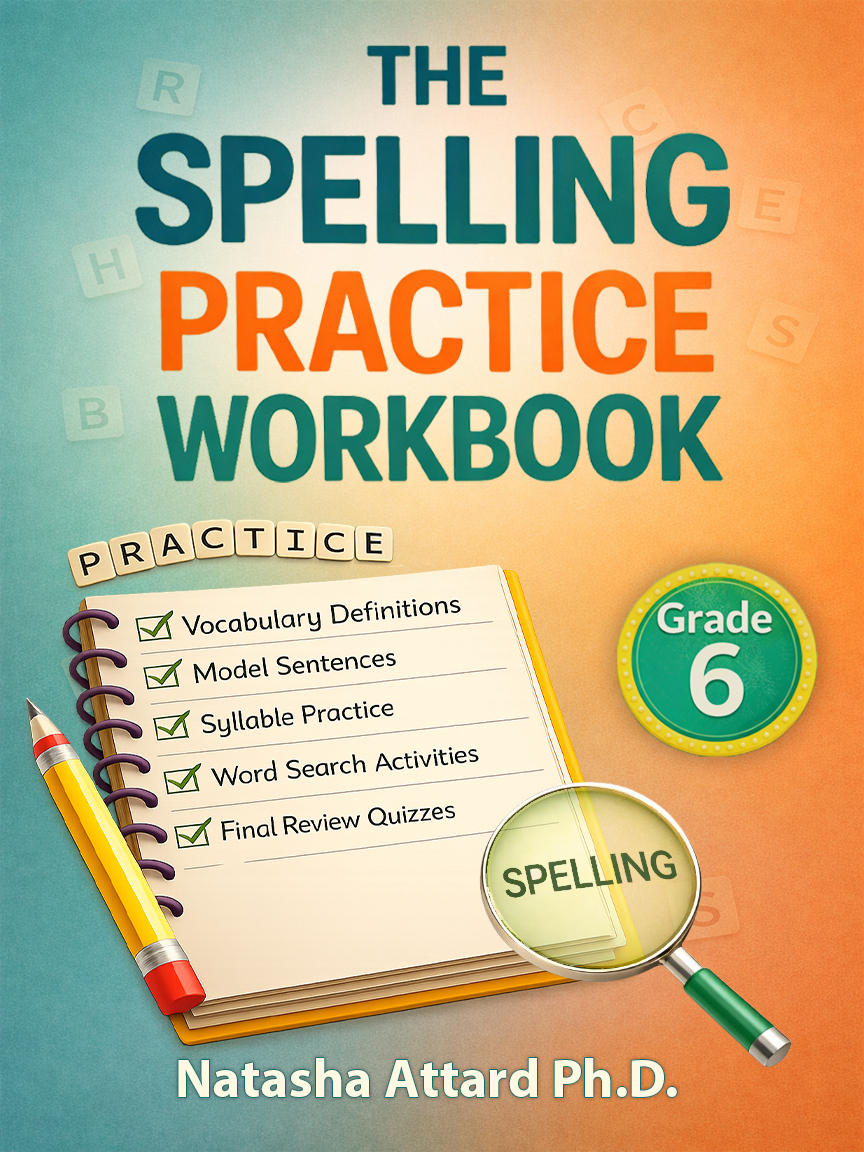
Spelling Practice · Grade 6
100 spelling words across 20 lessons, with definitions, sentence writing, and vocabulary practice.
View Book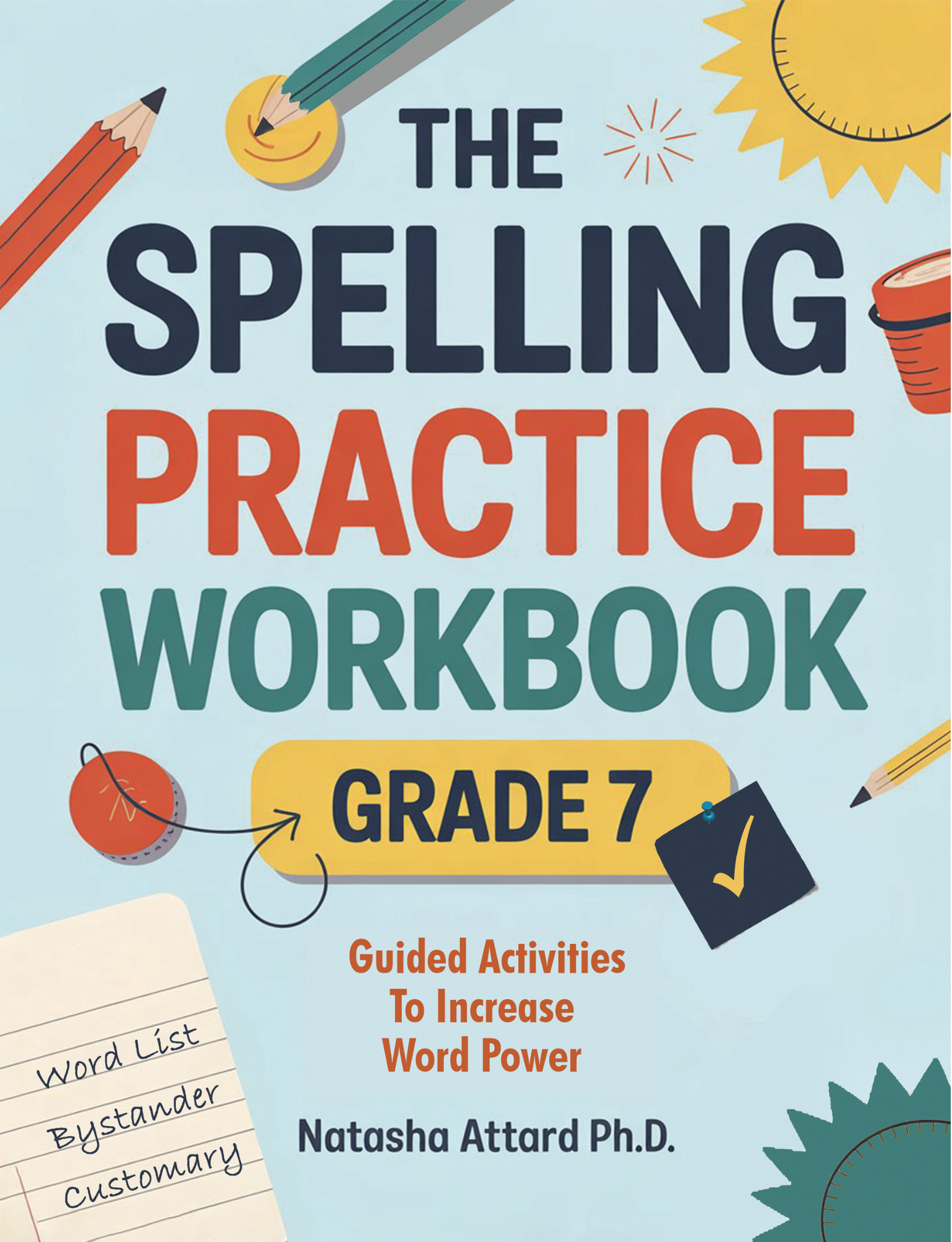
Spelling Practice · Grade 7
120 spelling words across 20 lessons, with syllable practice, synonyms, and sentence writing.
View Book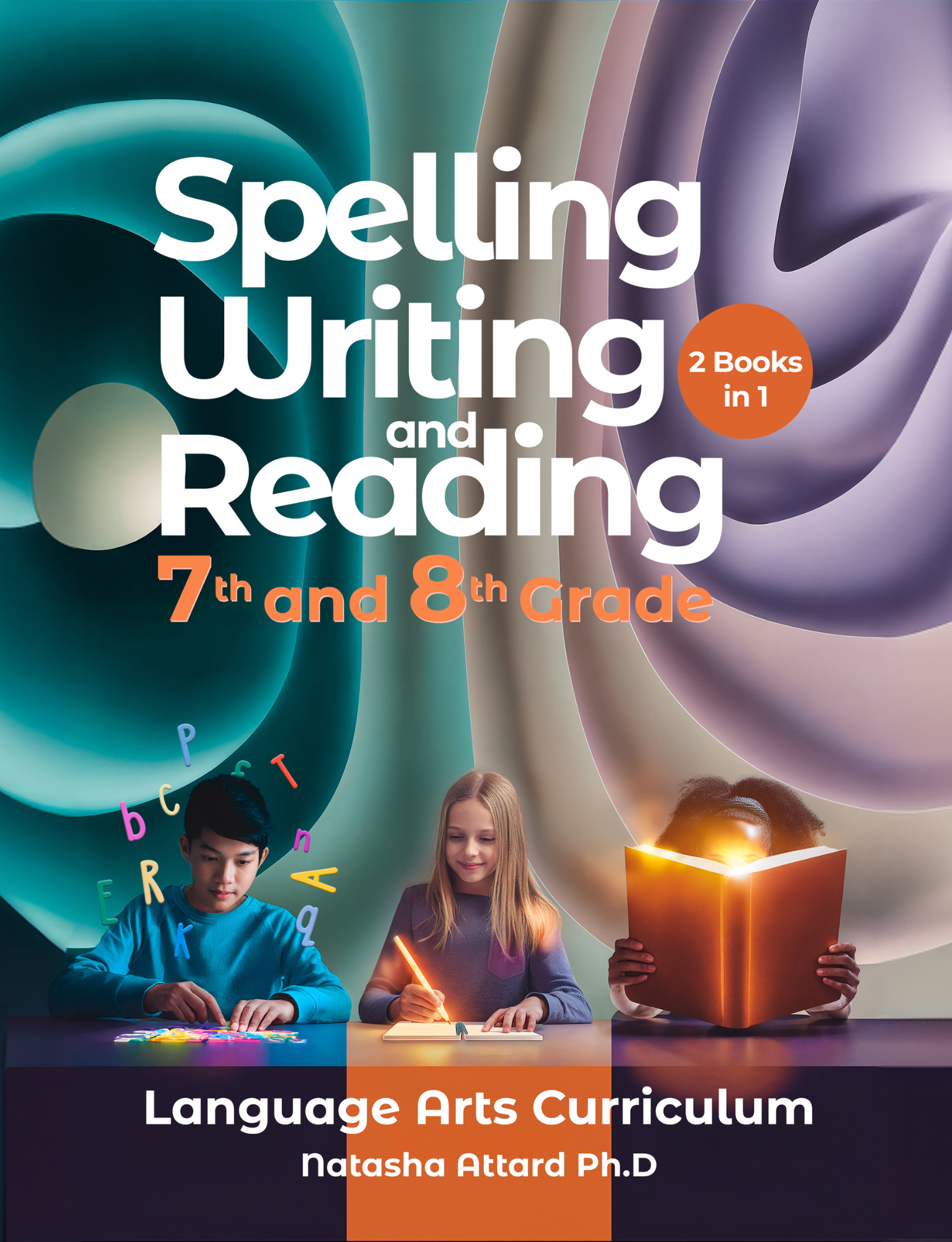
Spelling, Writing and Reading · Grades 7–8
An integrated ELA curriculum with guided writing, reading practice, spelling, and vocabulary.
View Book
Vocabulary and Spelling Practice · Grade 7
20 lessons combining word meanings, spelling, and writing, with seven progress assessments.
View Book
Vocabulary Building · Grade 7
180 vocabulary words across 36 weeks, with activities that develop understanding and word use.
View Book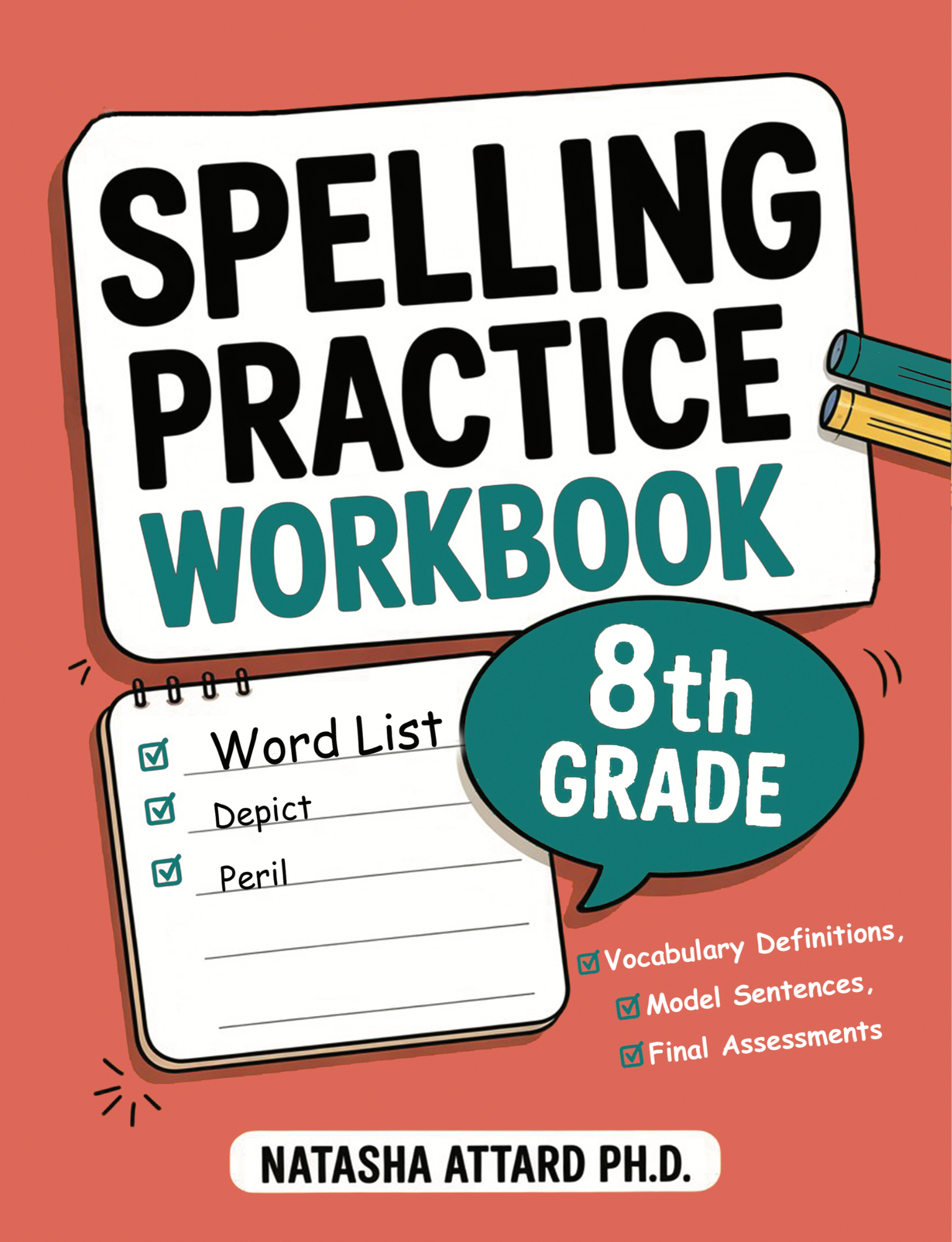
Spelling Practice · Grade 8
100 spelling words across 20 lessons, with model sentences, writing activities, and word puzzles.
View Book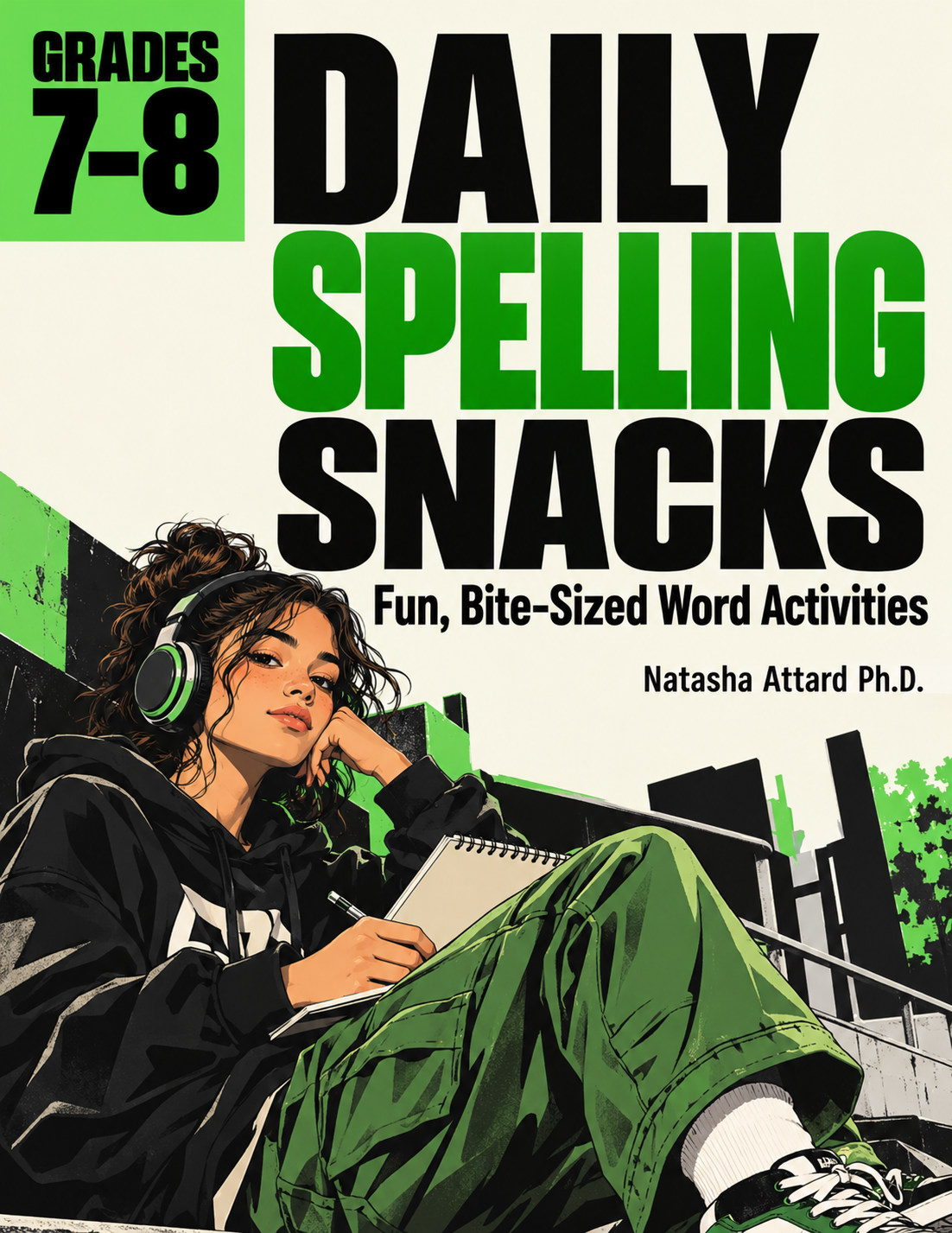
Daily Spelling Snacks · Grades 7–8
Short daily activities combining spelling, word meaning, word structure, and writing.
View Book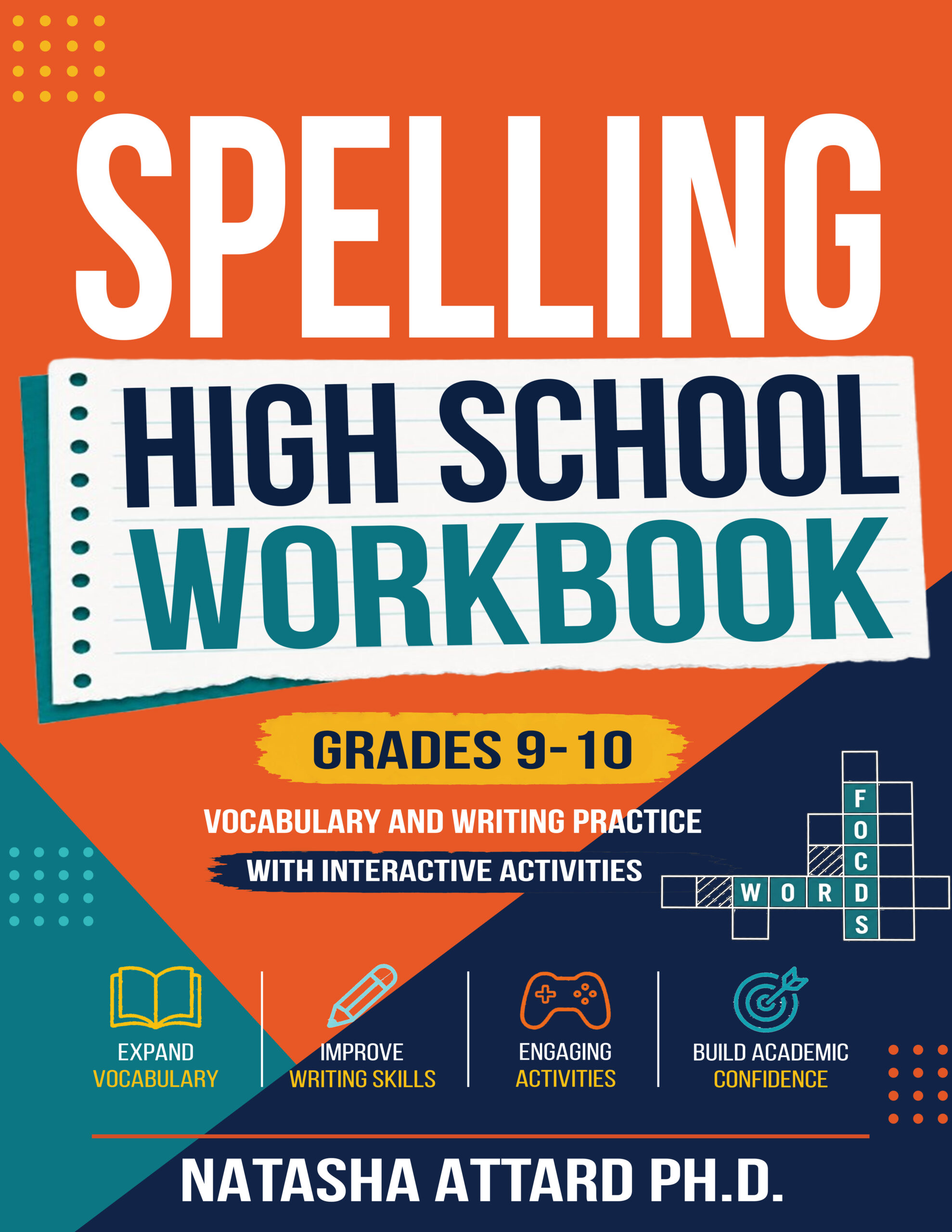
Spelling High School · Grades 9–10
Spelling, vocabulary, and writing practice, supported by interactive games and quizzes.
View Book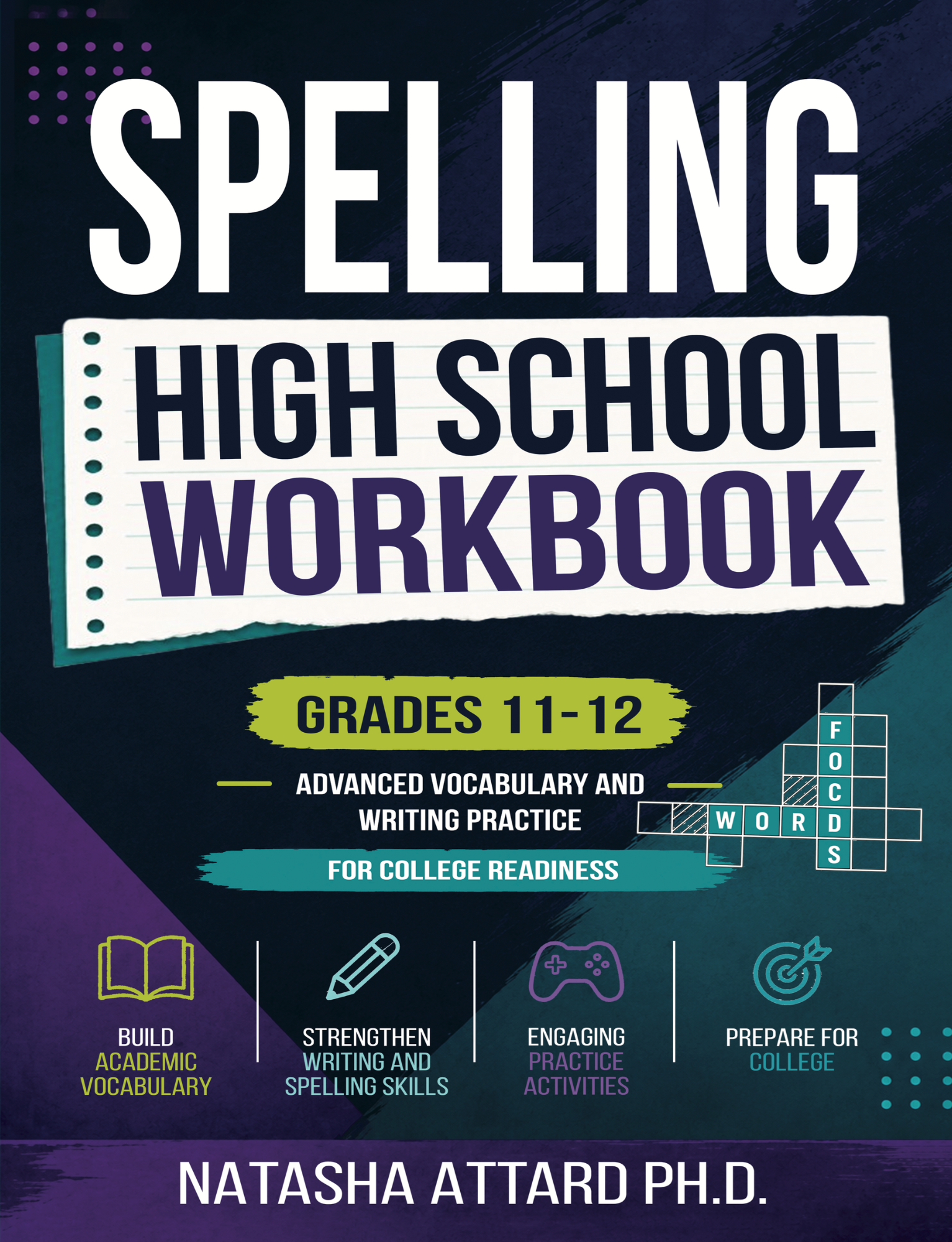
Spelling High School · Grades 11–12
Advanced spelling and vocabulary practice with writing activities and interactive quizzes.
View Book
Grammar Visual Guide · Grades 9–10
Full-color grammar explanations and examples, with short checks and an answer key.
View Book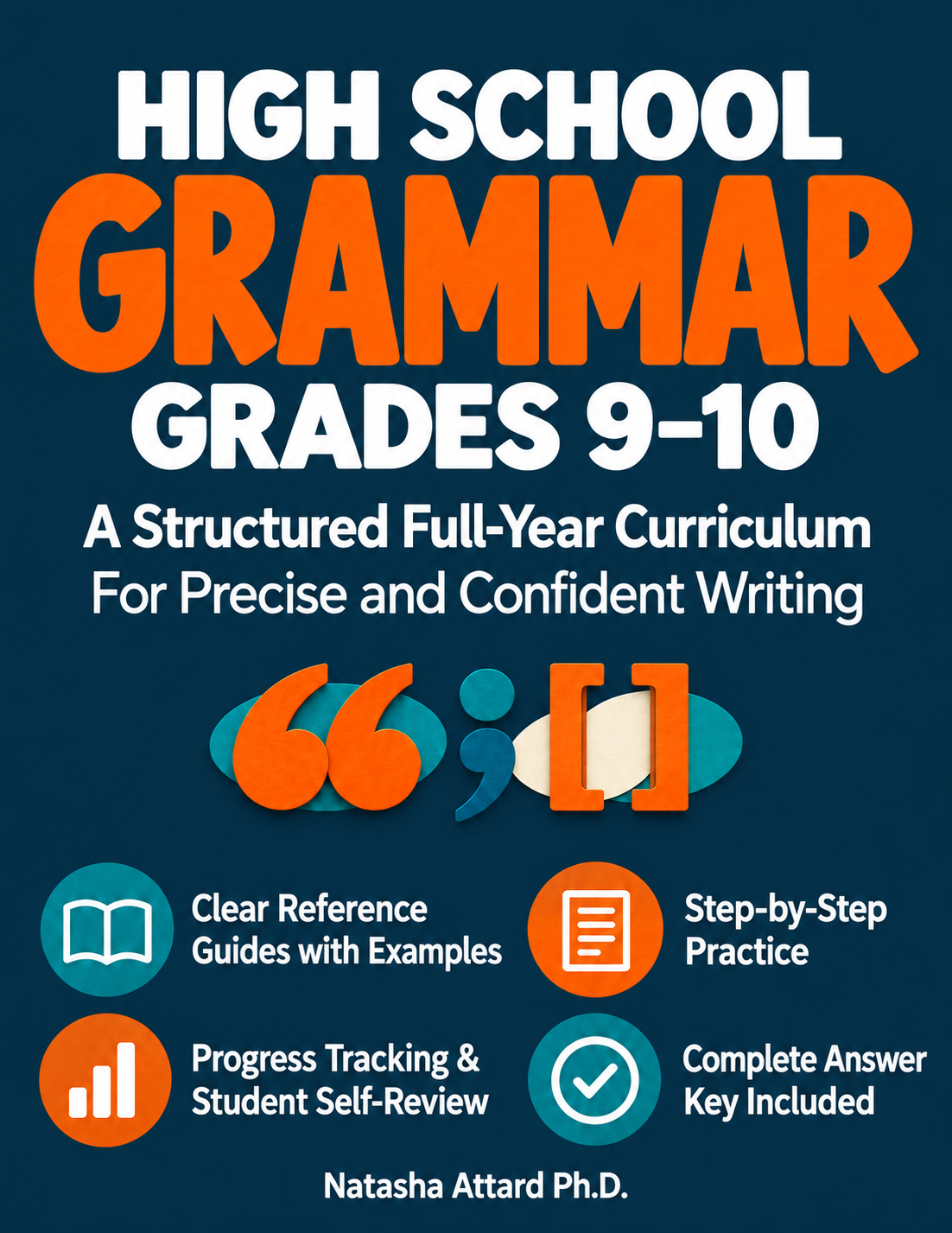
High School Grammar · Grades 9–10
A 30-week curriculum with reference guides, progressive practice, editing, and proofreading.
View Book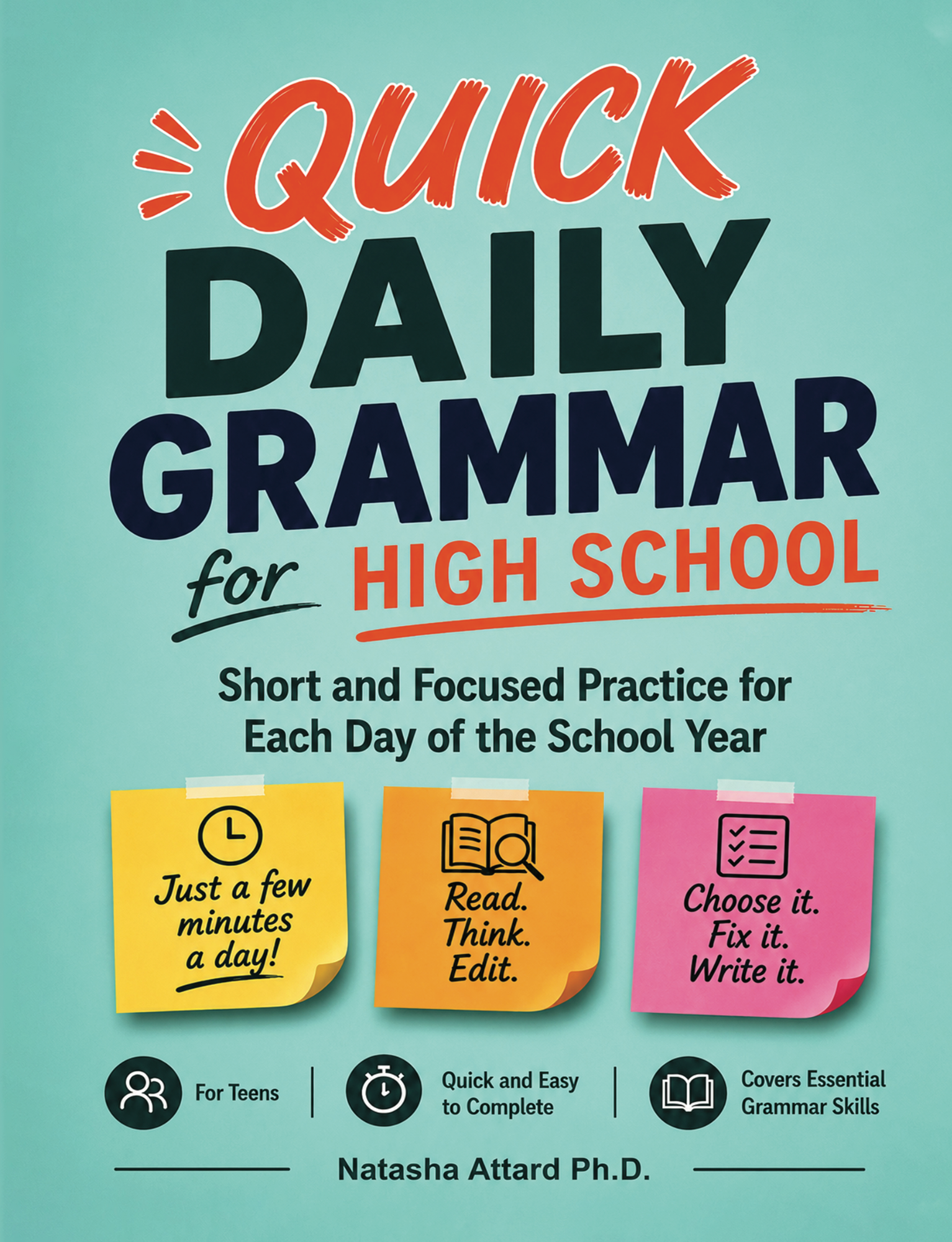
Quick Daily Grammar for High School
36 weeks of short daily grammar activities, with explanatory notes, reviews, and an answer key.
View Book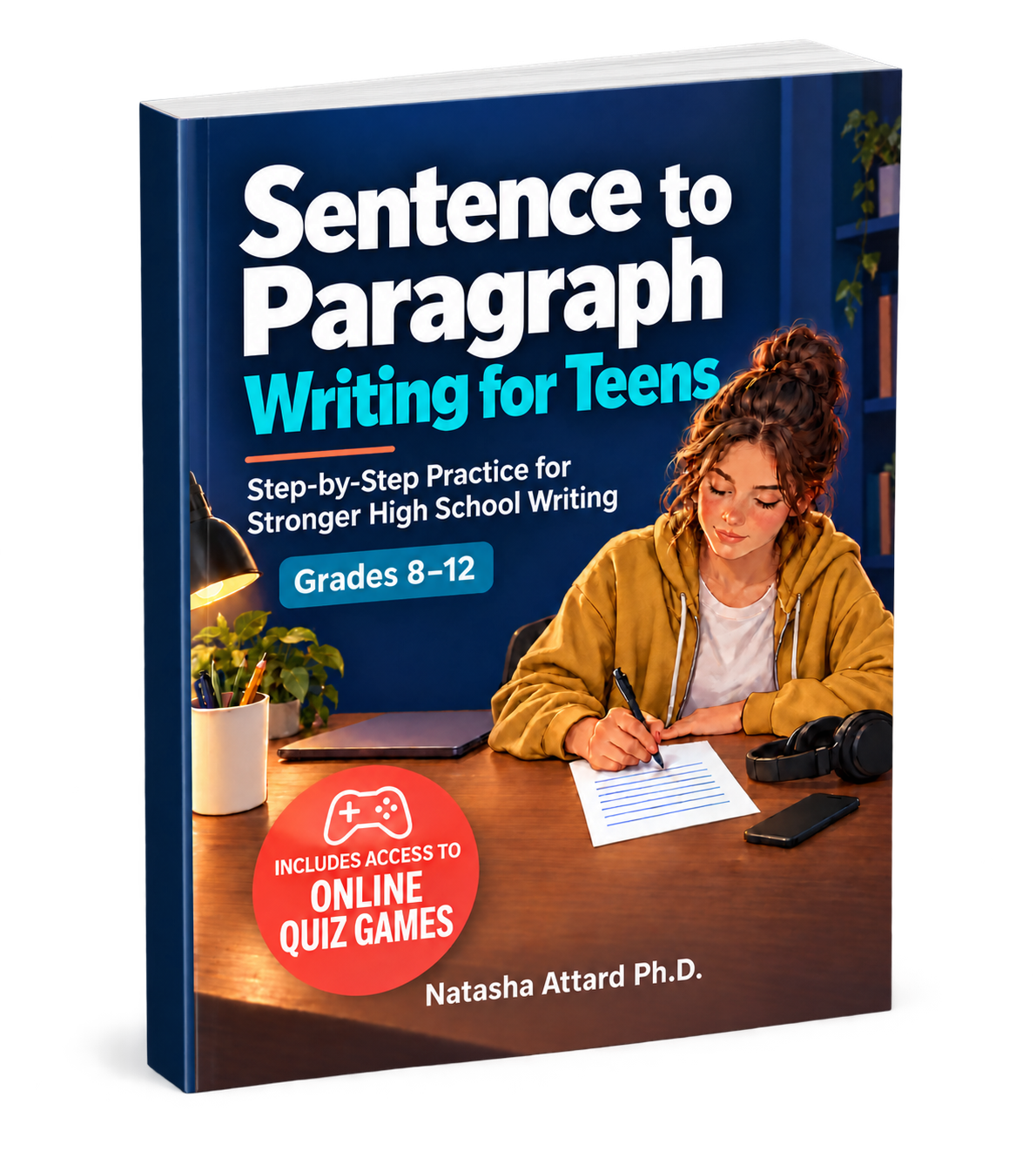
Sentence to Paragraph Writing for Teens
27 lessons for Grades 8–12, building focused paragraphs through the Focus, Build, Connect, Check method.
View BookQuick Reference Guide