Why Note-Taking Matters During ELA Lessons (And How to Help Your Teen Do It Well)
Today, I’d like to share why note-taking is so valuable and how you can easily support it at home during your ELA lessons. I will also share a free resource to get you started.
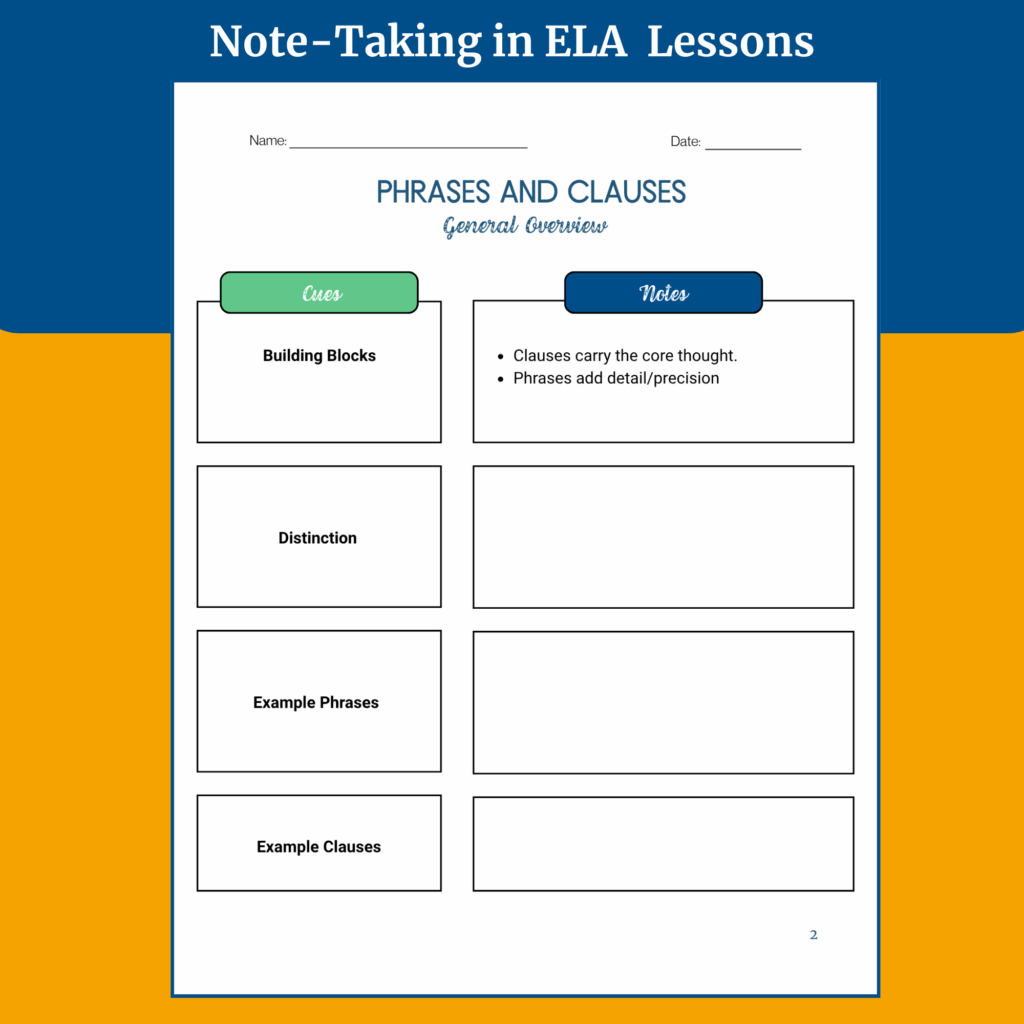
Many parents assume that note-taking is something students just know how to do. But in reality, effective note-taking is a learned skill, one that becomes increasingly important in middle school and high school when texts become denser, concepts deepen, and expectations grow.
In English Language Arts (ELA), strong note-taking skills help students remember information and understand, organize, and connect ideas. The way your teen takes notes shapes how well they process and later apply what they’ve learned.
Why Note-Taking Matters in ELA
1. It turns passive learning into active thinking
Watching a video or listening to an explanation can be passive.
But when students write down ideas, examples, or definitions, their brain is forced to slow down, choose what matters, and make meaning of it.
This “active learning” helps them:
- understand concepts more deeply
- retain information for longer
- make connections between ideas
In grammar especially, clarity often comes while writing something down, not just hearing it.
2. It builds focus and helps reduce distractions
Homeschool parents often tell me,
“Sometimes my teen listens… but they don’t really listen.”
Guided note-taking helps because it:
- gives students a concrete task
- keeps their hands engaged
- anchors their attention
- reduces the temptation to drift
When they know they’ll be filling in key definitions or examples, they naturally stay more focused.
3. It provides a study tool for later
Notes become:
- a quick-reference guide
- a review tool before quizzes
- a way to see how concepts connect
This is especially useful for grammar, where students learn different pieces that eventually fit together (phrases → clauses → sentence structure → punctuation → composition).
Good notes today make tomorrow’s lessons easier.
4. It builds academic independence
By Grade 7–10, students are moving into more complex writing and reading tasks.
Note-taking helps them:
- take ownership of their learning
- organize information themselves
- build habits they’ll use in higher grades
This independence is incredibly important for homeschool success.
How to Support Effective Note-Taking at Home
1. Use structured prompts (not an empty page)
Students learn better when there are cues, prompts, or headings that guide what they should write.
For example:
- “Definition of a phrase:”
- “Example from the lesson:”
- “Difference between dependent and independent clauses:”
- “Notes from the video:”
These cues help students stay focused and avoid feeling overwhelmed.
2. Pause the lesson when needed
One of the advantages of homeschooling is the ability to pause, rewind, or slow down instruction—something students can’t do in a classroom.
3. Encourage students to add their own examples
Some of the best learning happens when students create a sentence or example themselves.
Encourage them to write:
- an example from the lesson
- one example they created
- a highlight or key idea they found helpful
This personal application makes their notes more meaningful.
4. Keep notes organized in one place
Whether your child keeps digital notes or uses a binder, consistency is key.
You can help by:
- creating a dedicated “ELA Notes” folder
- printing and filing their completed organizers
- keeping grammar notes together so they can review easily
A simple binder often becomes a powerful reference tool for the entire school year.
Free Download: Grammar Lesson + Note-Taking Organizer
This free PDF includes a short Introduction to Phrases and Clauses lesson and a note-taking organizer your teen can use while reading.
The lesson covers key content from the CCSS for Grades 7–10, introducing phrases, clauses, and the difference between dependent and independent clauses—an essential foundation for later grammar skills.
If your teen finds this helpful, they can try a more active note-taking experience with the 14-minute video version of this lesson. The full Homeschool Pack includes:
- 14-minute video lesson
- Guided notes organizer with built-in cues aligned to the video
- Digital quiz (Google Forms)
- Printable quiz (PDF)
- Answer key
