Halloween Vocabulary Activities for 7th Grade
Free Lessons and an Interactive Game
If you teach seventh grade or support vocabulary learning at home, I’m offering you Weeks 10–13 from my book free of charge. You can use the passages and word activities with your students and try the accompanying Halloween vocabulary game, which revisits words from Weeks 10–12.
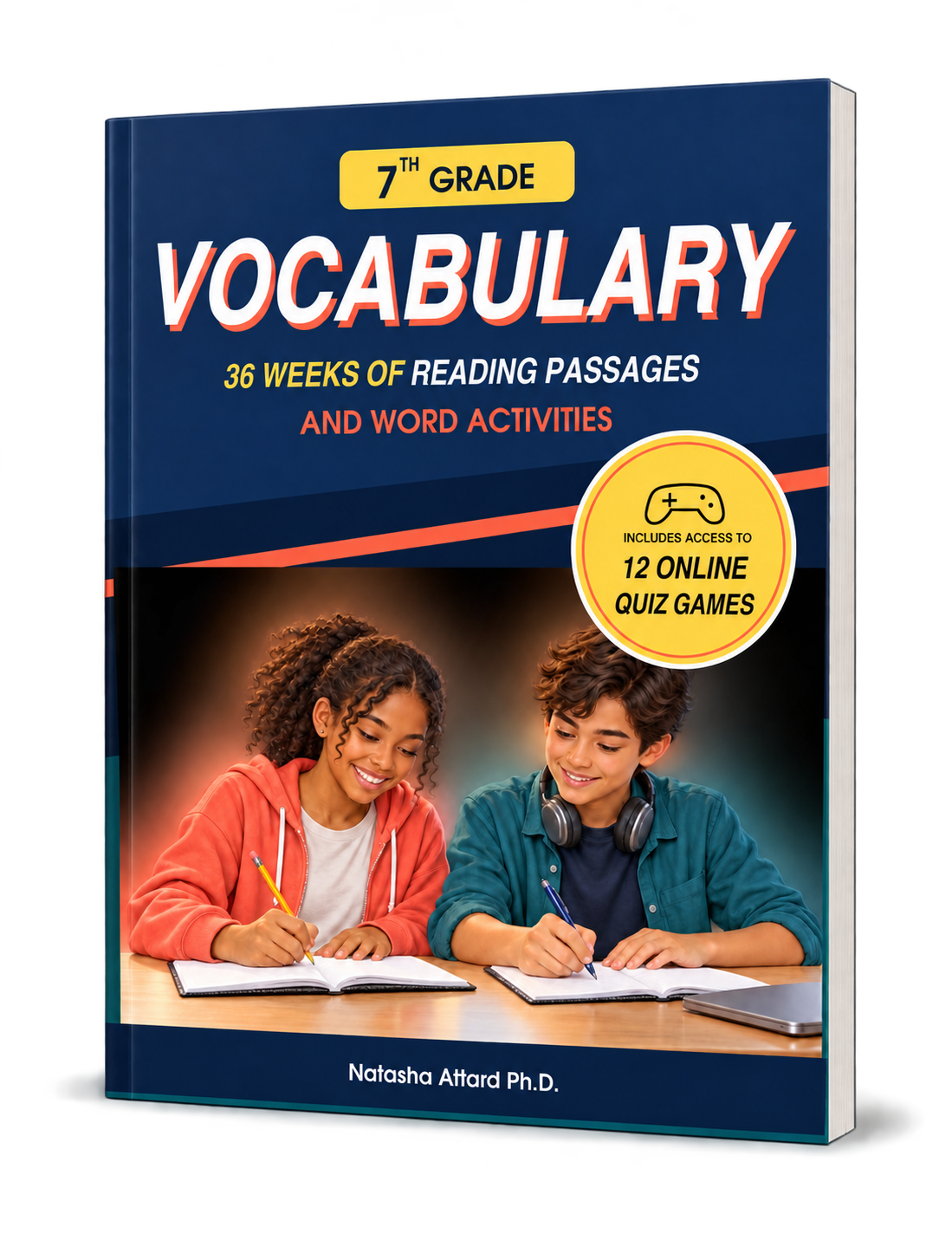
Complete the form in this article to receive the free lesson sample to print or use digitally, together with access to the game. You can also explore 7th Grade Vocabulary: 36 Weeks of Reading Passages and Word Activities to see what the full book includes.
My book, 7th Grade Vocabulary: 36 Weeks of Reading Passages and Word Activities, helps students build vocabulary through reading and activities that encourage them to examine and use words in context.
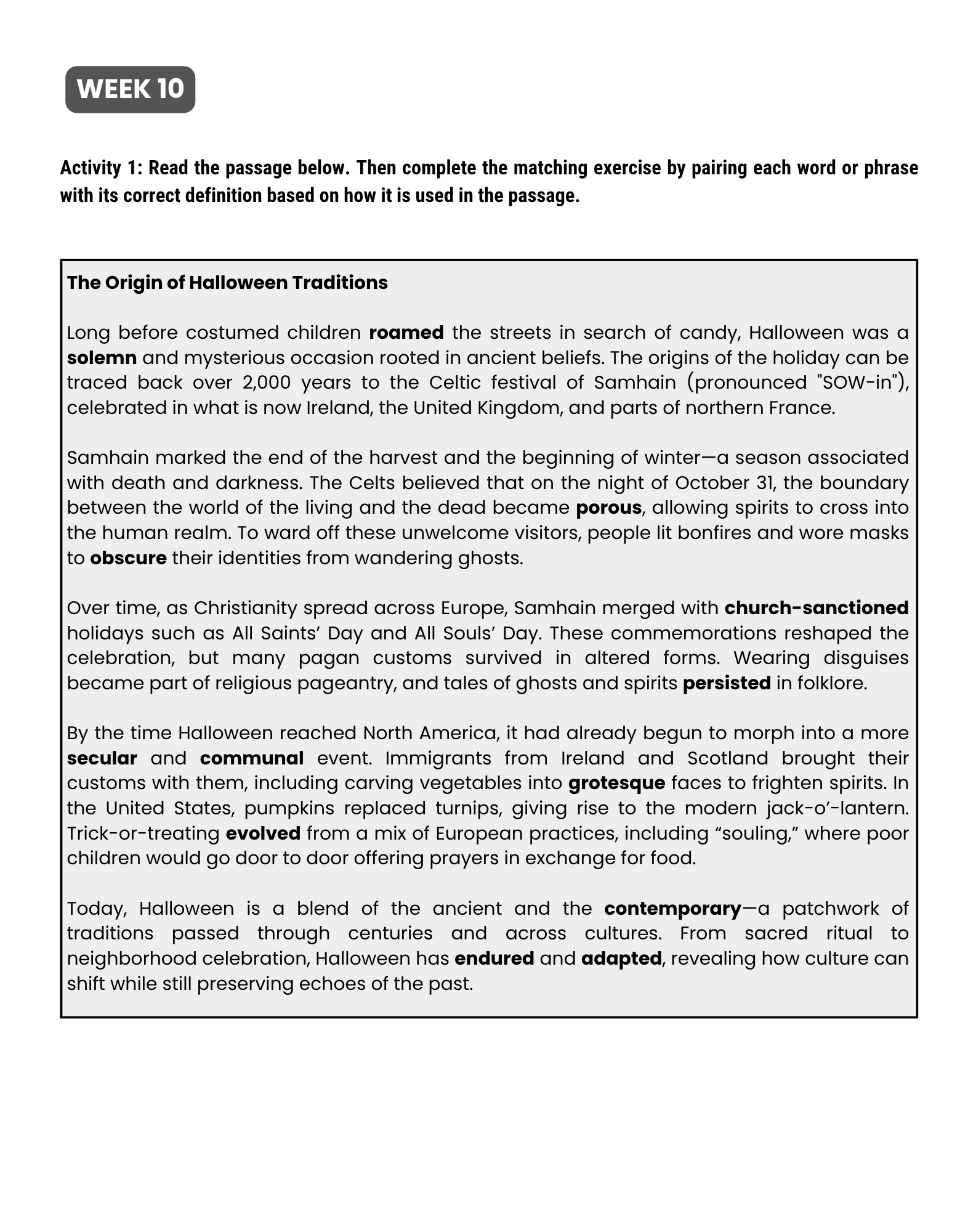
In this article, we will work through Week 10, The Origin of Halloween Traditions, with suggestions for using the passage and vocabulary activities. The free sample also includes Week 11, The Last Harvest, and Week 12, Exploring the Writing of Edgar Allan Poe, together with the accompanying Halloween vocabulary game.
Each lesson begins with a passage and continues with vocabulary activities connected to the reading. The aim is to help students develop their understanding of words through engaging passages, careful attention to meaning, and opportunities to use the vocabulary themselves. Each weekly lesson takes approximately 30 minutes to an hour, depending on the level and proficiency of the student.
The walkthrough below offers a brief look at each lesson and suggestions for using it with students. You can request the complete three-lesson sample and access to the accompanying Halloween vocabulary game through the form in this article.
Week 10: The Origin of Halloween Traditions
This lesson combines a passage about Halloween traditions with vocabulary matching and synonym practice. Students first examine words as they appear in the passage, then consider their meanings in different sentences.
1. Begin with the Reading
Before reading, ask students what they know about Halloween traditions. They might mention costumes, carved pumpkins, or trick-or-treating. Keep this discussion brief, then invite them to read to find out how some traditions developed and changed.
Students can read independently, or you can read the passage together if they need support. Encourage them to notice unfamiliar words without stopping to complete the matching activity immediately. The first reading should help them understand the passage as a whole.
Afterwards, ask: “What are some differences between the earlier celebrations described here and Halloween today?” Students can return to the passage to support their answers.
2. Use the Passage to Examine Word Meanings
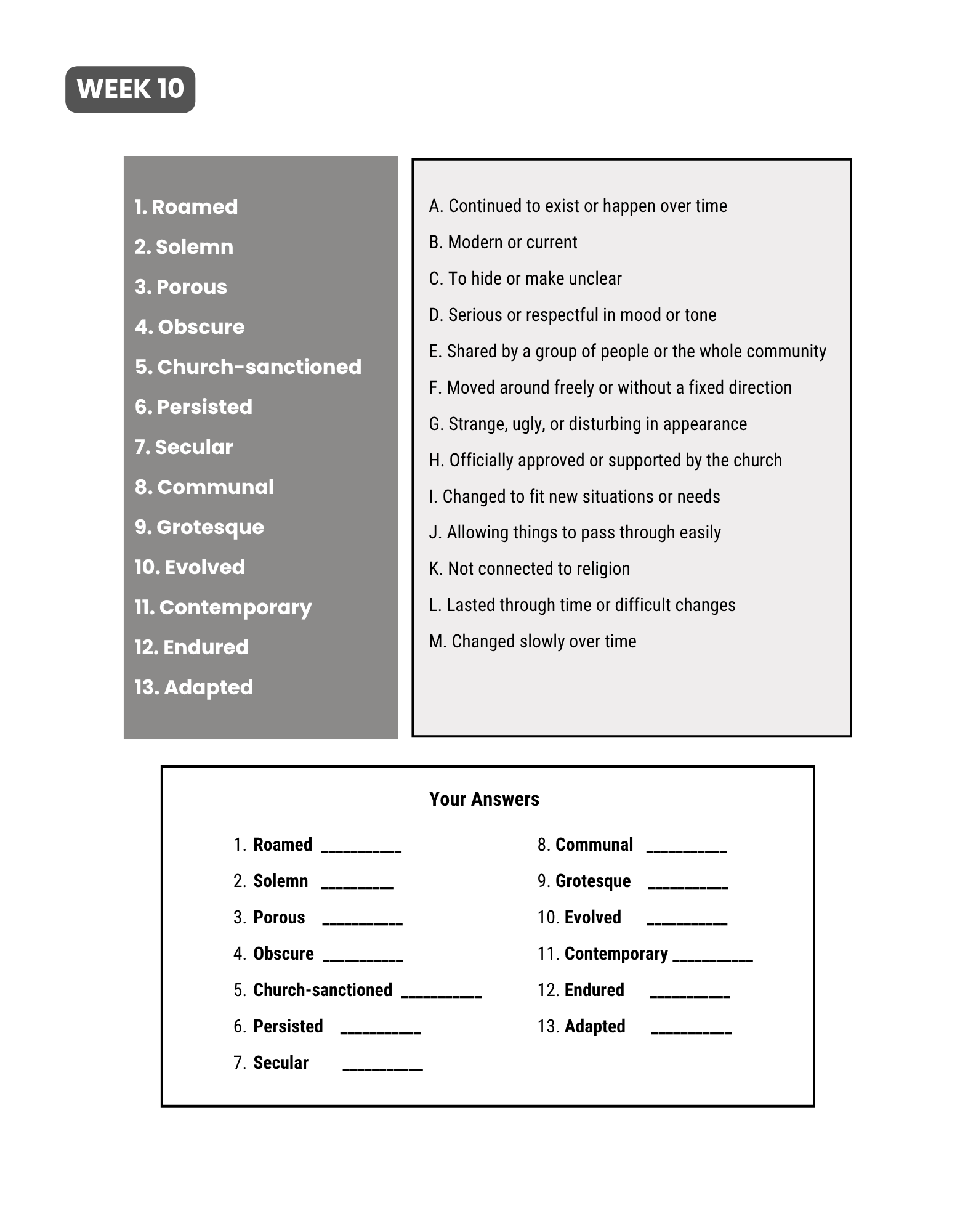
Next, turn to the definition-matching activity. Ask students to reread the sentence containing each word and check whether the surrounding details help explain it.
For example, the passage describes the boundary between the living and the dead as porous, followed by an explanation that spirits could cross it. Ask:
- What could pass through this boundary, according to the beliefs described?
- Which definition of porous fits that explanation?
- How does the explanation help you choose?
This gives students a reason for selecting “allowing things to pass through easily.” They are connecting the definition with the meaning of the passage.
Some words will need more explanation. If the context does not provide enough information, discuss the meaning or consult a dictionary together. Students should learn to use context where it helps and recognise when they need another source.
3. Check Synonyms in the New Sentences
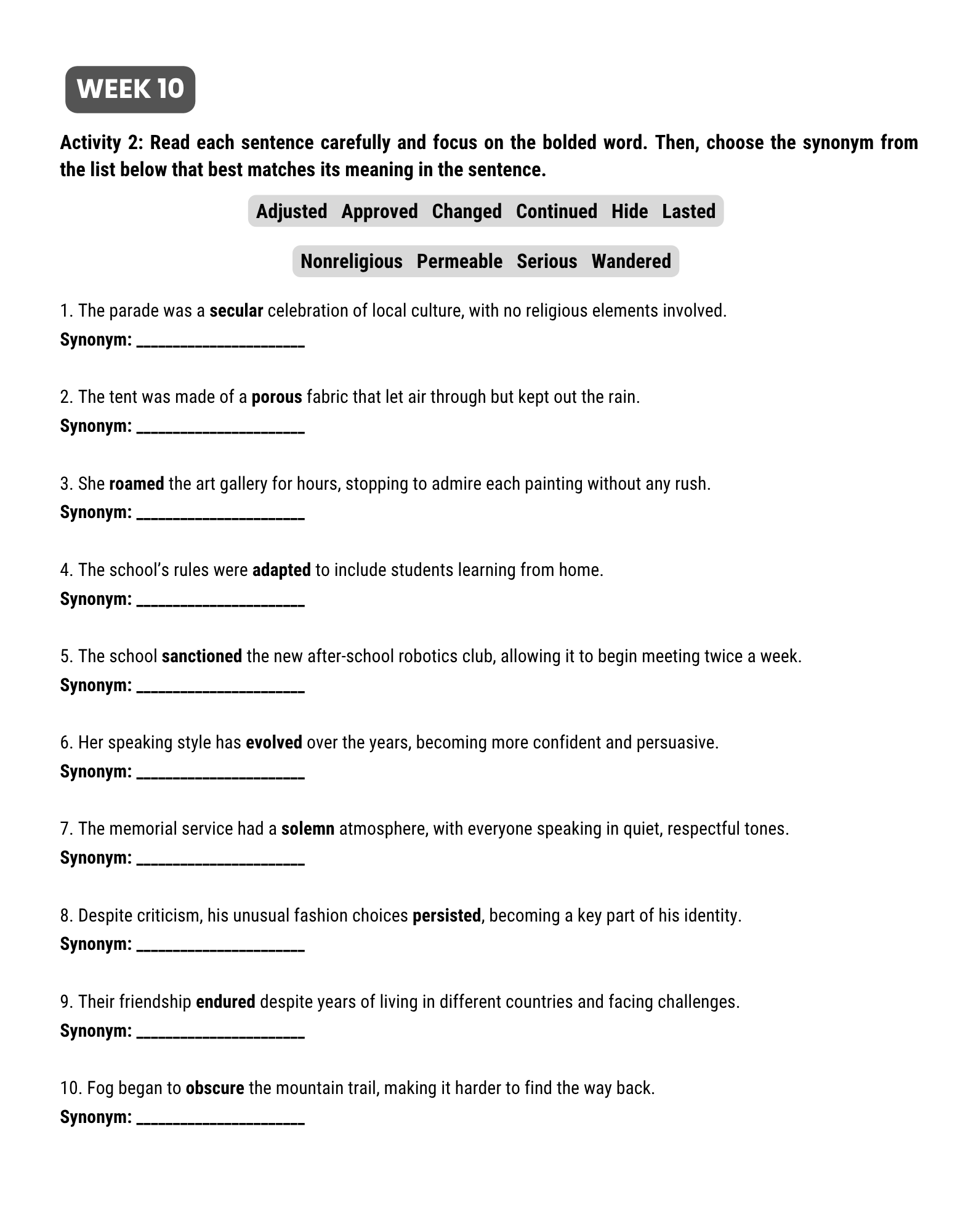
The second activity places vocabulary from the passage in new sentences. Students choose a synonym from the word bank that fits each use.
Ask them to read the whole sentence before choosing. Once they have selected a synonym, have them substitute it for the bold word and reread the sentence. Does it preserve the meaning?
For example, the sentence about a solemn memorial service includes quiet, respectful speech. These details help students connect solemn with serious. Discuss why a solemn occasion does not necessarily mean that everyone is frightened or unhappy.
This activity also gives students another encounter with the vocabulary outside the Halloween passage. A word introduced through a historical celebration can describe an everyday situation too.
4. Finish with a Short Vocabulary Check
Choose two or three words from the lesson and ask students to explain them without looking at the matching list. Then invite them to use one in a new sentence.
If a student gives a very general sentence, ask for a detail that makes the meaning clearer. For obscure, for instance, “The fog obscured the road signs, so we could not read them” shows what the word means.
Obscure: The fog obscured the road signs so we could not read them.
Use their responses to decide which words need another look before moving on.
Continue with Weeks 11 and 12
The free sample also includes two further lessons. In Week 11, The Last Harvest, students explore vocabulary in an autumn story and support their answers with details from the passage. Week 12, Exploring the Writing of Edgar Allan Poe, connects word meanings with mood and suspense, followed by sentence writing. Both follow the same approach as Week 10: students encounter words through reading, examine their meanings, and practise using them in different ways.
Extra Practice and Reflection
After completing the lessons, you can use the additional resources to revisit the vocabulary and help students identify what they know and what needs more practice.
Vocabulary Cards for Extra Practice
The vocabulary cards bring the words and definitions together for review. You can access them on a password-protected page; the link and password are included in the free sample lesson download.
Choose a few cards at a time and ask students to explain a word before checking its definition. They can also give an example or use the word in a sentence. Set aside words that need another look and return to them in a later session.
The Optional Halloween Vocabulary Game
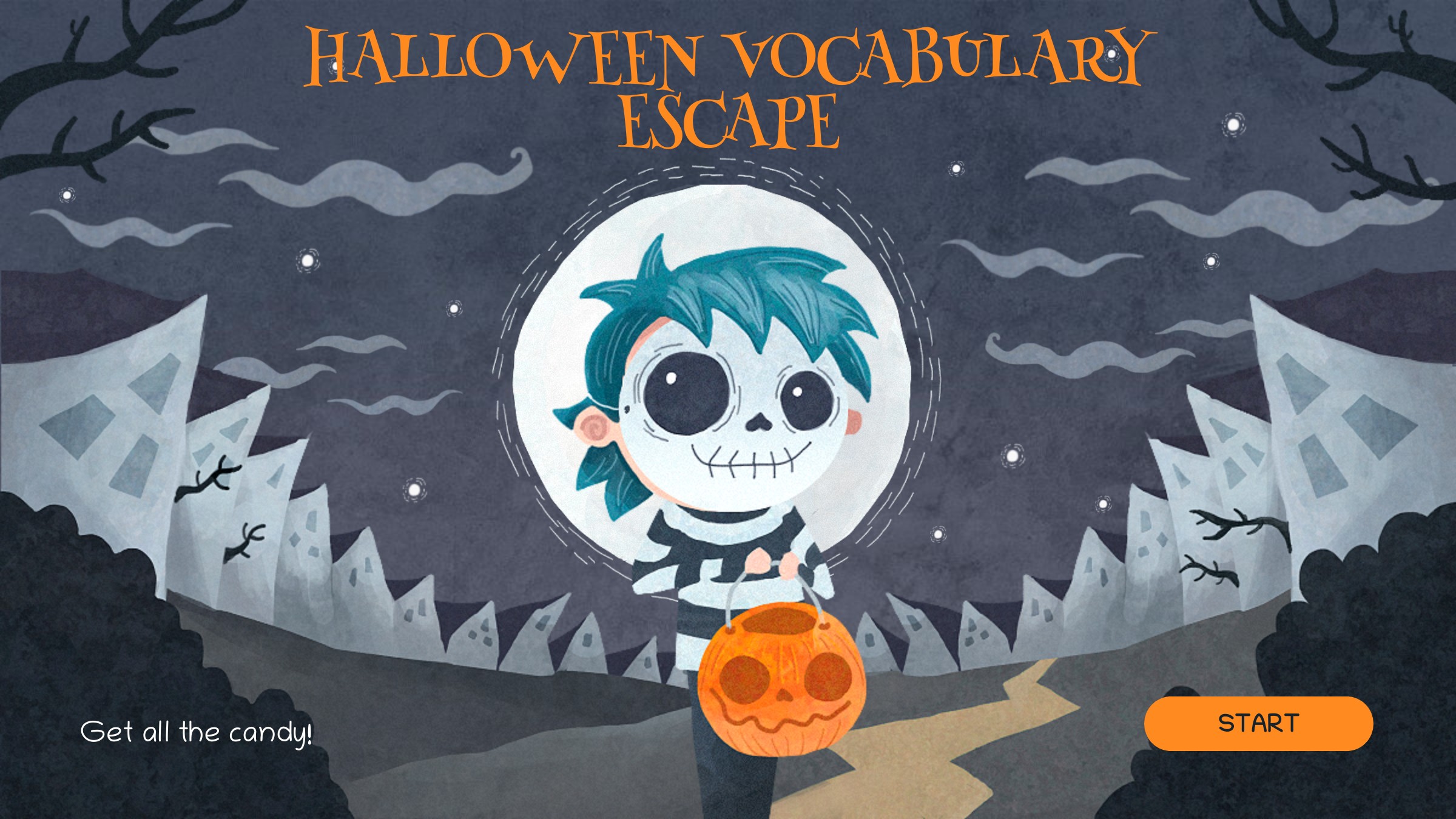
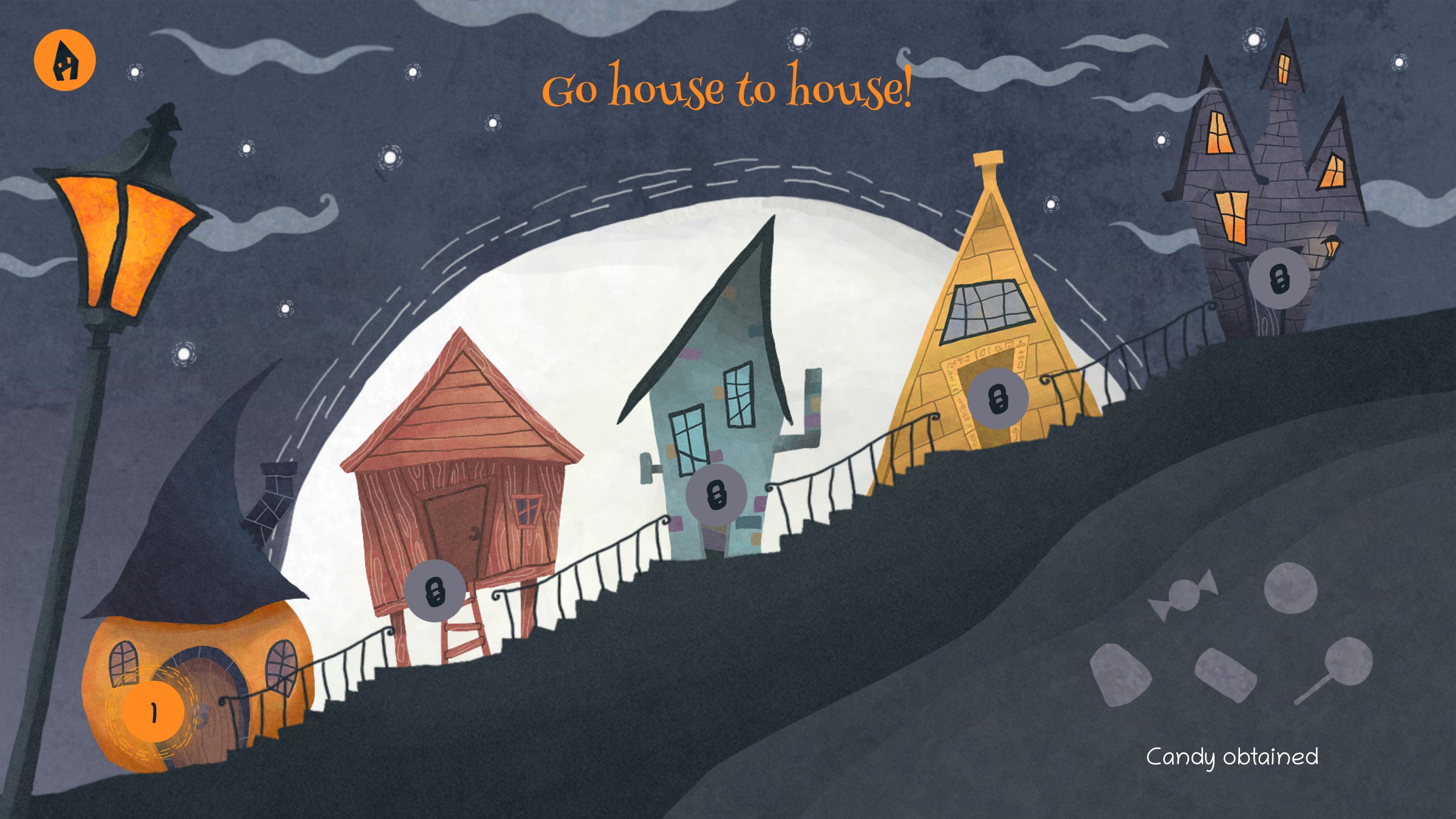
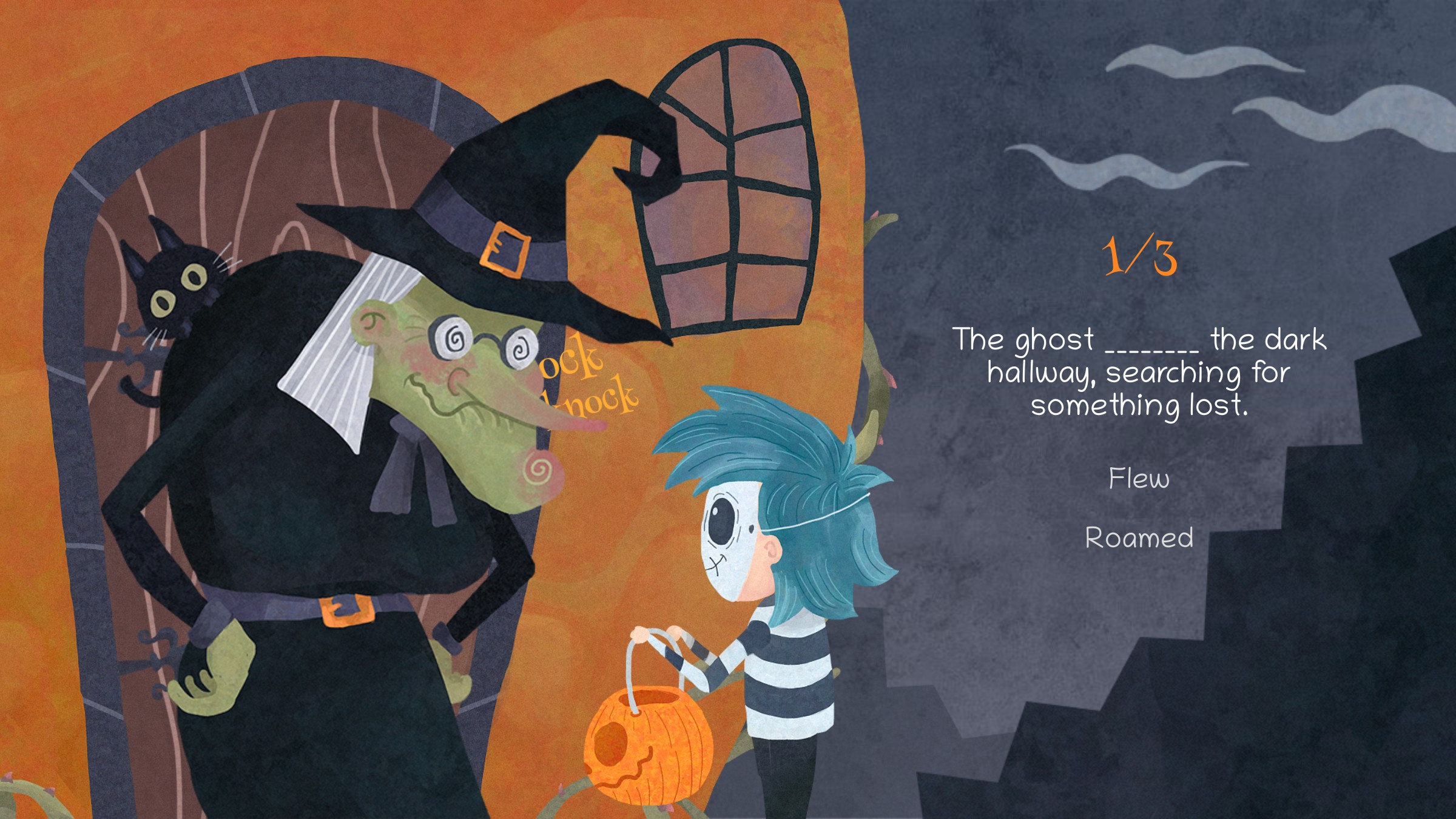
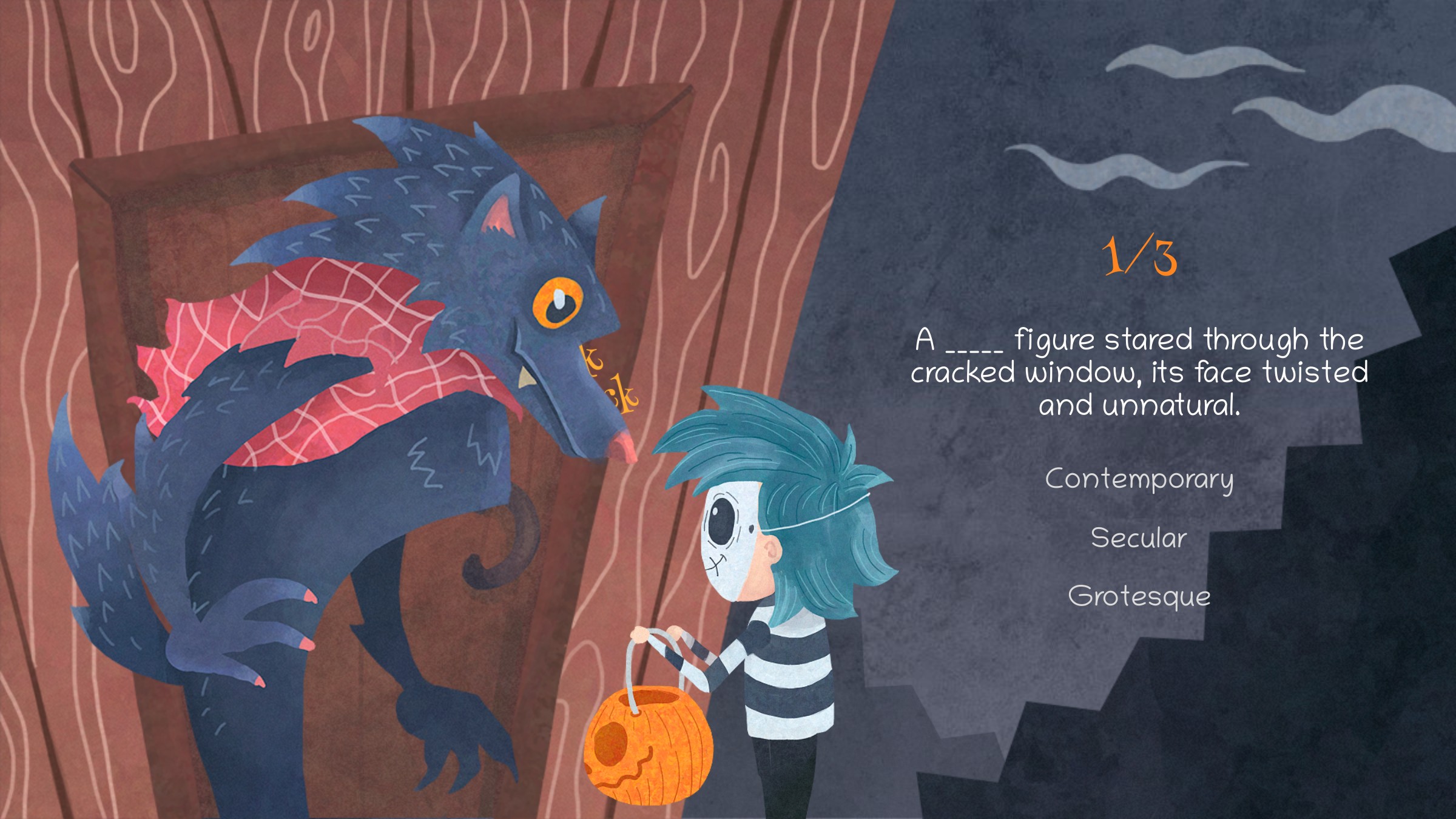
Halloween Vocabulary Escape gives students another opportunity to practise vocabulary from Weeks 10–12. The game is on a password-protected page; the link and password are included in the free sample lesson download.
You can use it after the lessons or as a review activity on another day. Afterwards, ask students to choose one question they found difficult and explain the meaning of the word involved. This gives you something useful to discuss beyond the final score.
Self-Reflection
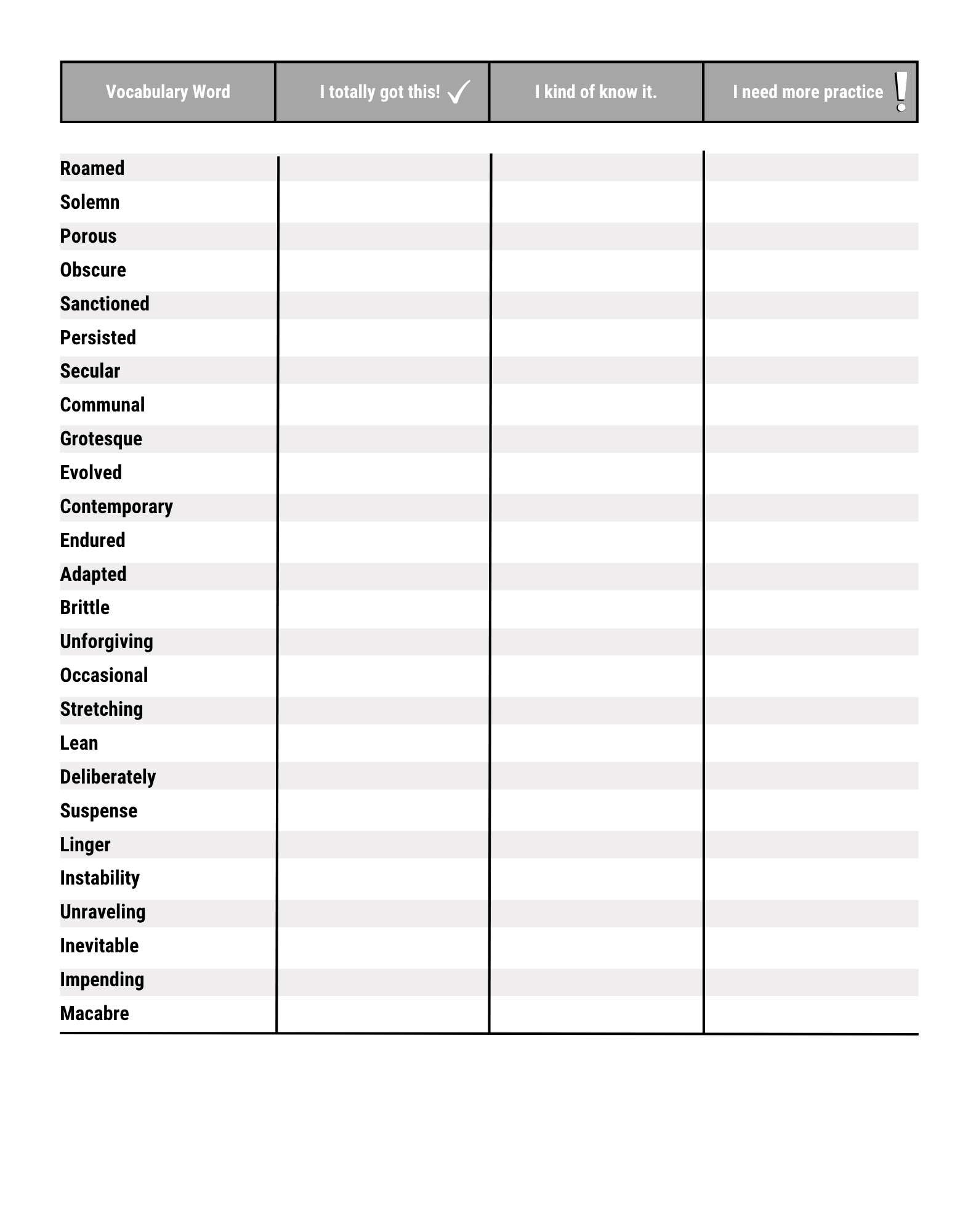
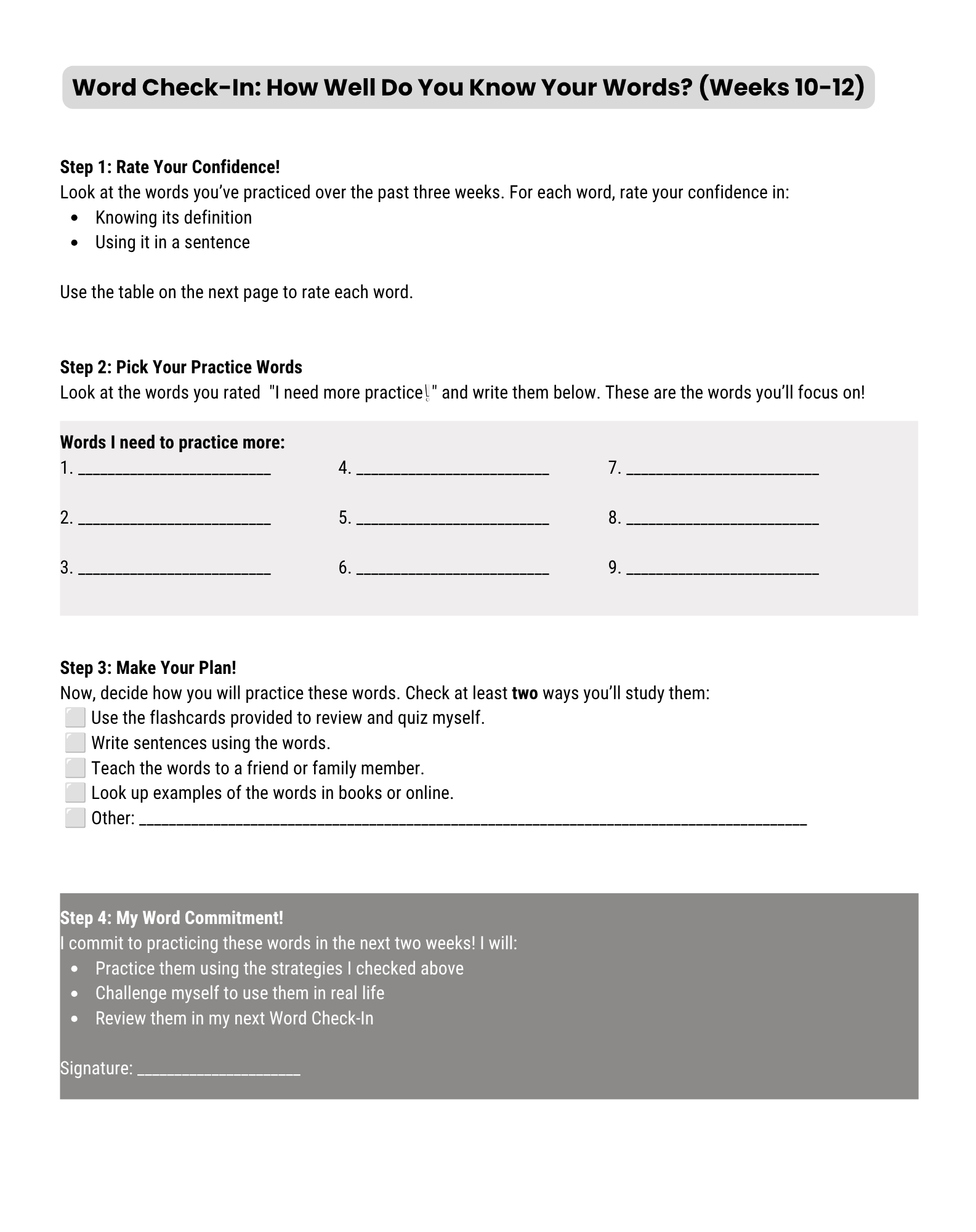
The self-reflection page invites students to consider how their vocabulary work is going. Encourage them to be specific: Which words can they explain confidently? Which do they recognise but still find difficult to use? Their responses can help you agree on a manageable next step, such as reviewing a few cards or revisiting a sentence from a passage.
Tracking Progress
The progress tracker provides a place for students to record what they know and identify words to revisit. Return to it after further practice so they can check whether their understanding has changed. Before marking a word as secure, ask them to explain its meaning and use it in context. This helps connect the record of progress with what students can demonstrate.