Why Understanding Clauses Improves Student Writing
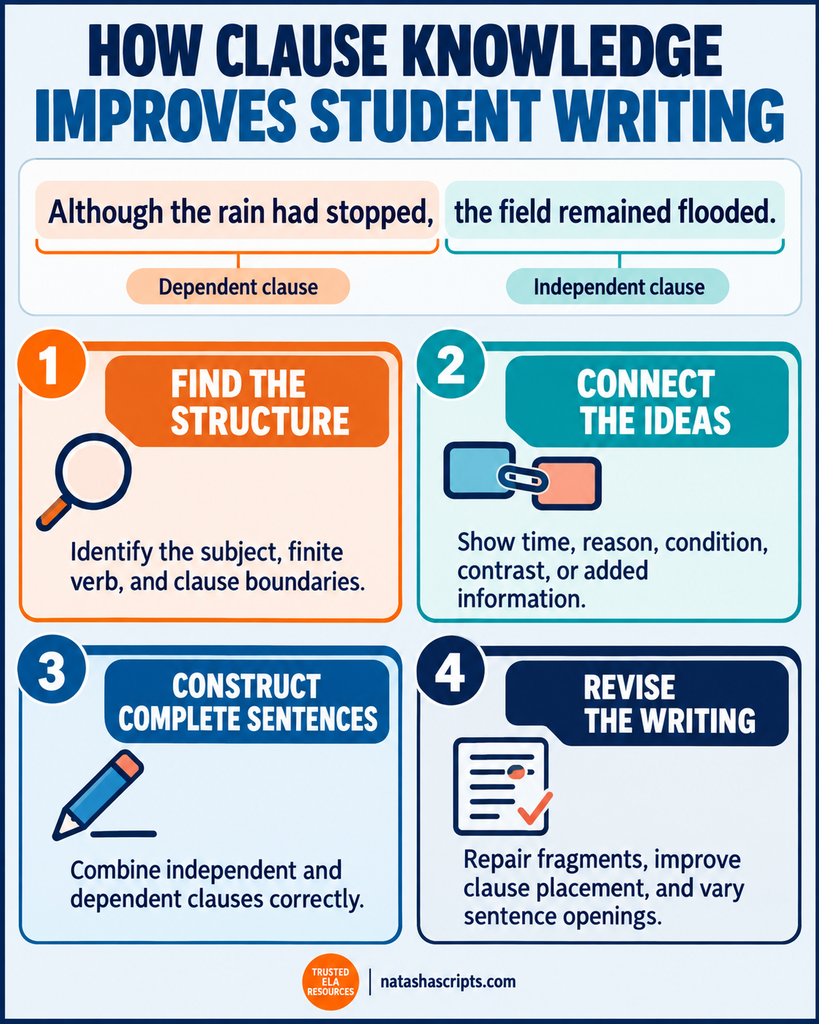
Recognizing Clause Problems in Student Writing
Teachers and homeschool parents can recognize clause problems more easily when students produce longer pieces of writing. A student may begin a sentence with although but stop before completing the idea. A relative clause may be placed too far from the noun it describes, making the sentence confusing. Several ideas may be joined without showing whether the relationship is one of time, reason, contrast, or condition. In other cases, every sentence in a paragraph follows much the same pattern.
From my teaching experience, students may be able to identify an independent or dependent clause in a grammar exercise and still have difficulty using clauses in their own writing. Knowing the terminology is only one part of the skill. Students also need to locate the boundaries between clauses, identify which clauses can stand alone, and see how one clause relates to another. This understanding helps them complete unfinished ideas, combine related information, and revise sentences that are repetitive or unclear.
How Clauses Connect Ideas
Clauses give students different ways to organize and connect their ideas. A noun clause contains a subject and finite verb but performs the work of a noun within a sentence. In What the committee decided surprised everyone, the noun clause what the committee decided acts as the subject of the sentence. In We understood why the road had closed, the noun clause why the road had closed acts as the object of the verb understood.
Relative clauses add information about a noun. In The photographs that we found in the attic had faded, the relative clause that we found in the attic identifies which photographs had faded. Its position matters because readers should be able to see immediately which noun the clause describes. Students also need to decide whether the information is essential to the meaning of the sentence, since this determines whether commas are required.
Adverbial clauses show relationships such as time, reason, condition, and contrast. A student can write We postponed the match because the field was flooded to explain a reason, or Although the evidence appeared convincing, the jury remained uncertain to express contrast. Choosing the clause carefully helps the reader understand how the ideas are related.
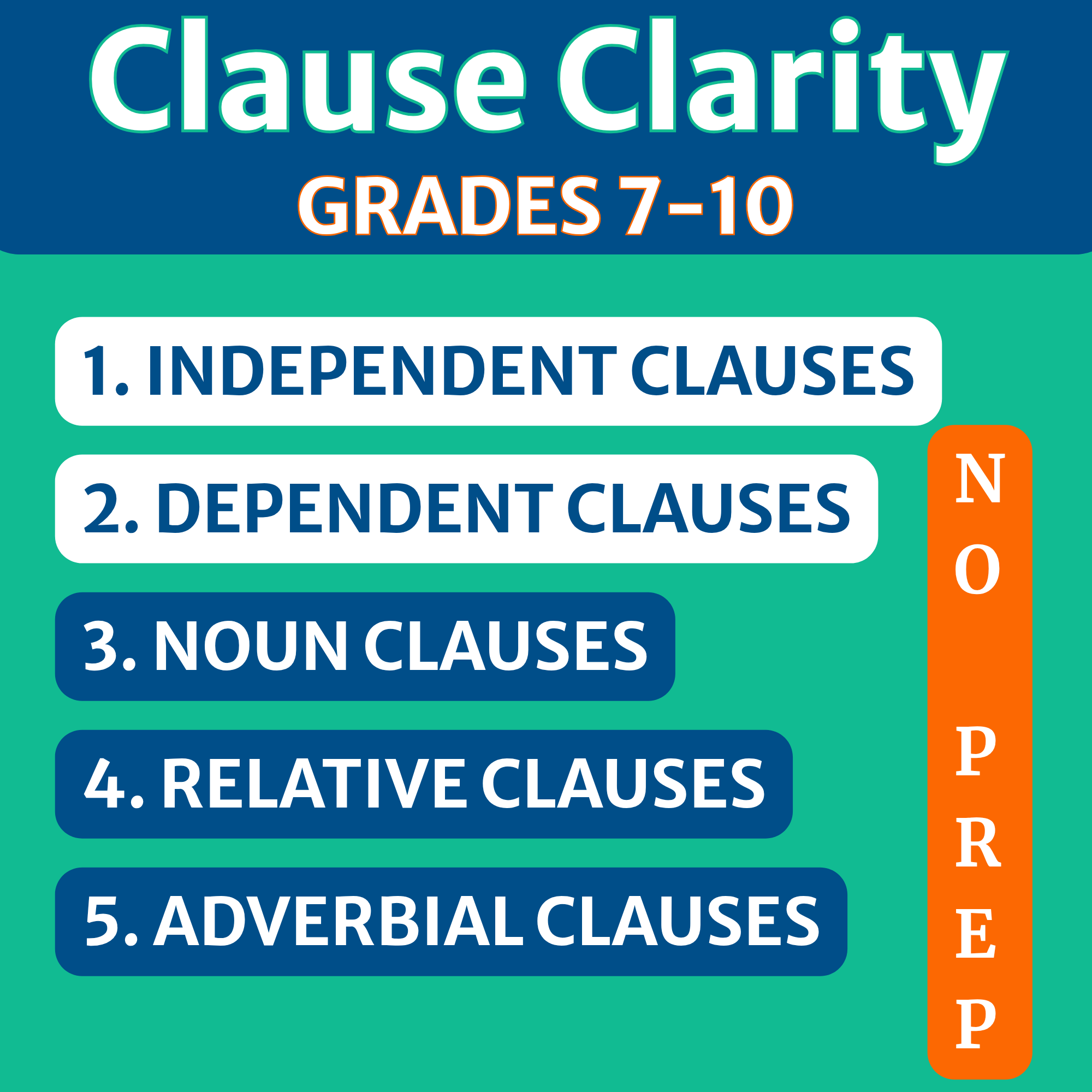
I created Clause Clarity: Dependent, Independent, Noun, Relative, and Adverbial Clauses to help students examine these functions and use them in their own sentences. The lessons include direct teaching, examples, guided analysis, sentence writing, and revision. Students learn the terminology, but they also apply it when choosing, placing, punctuating, and revising clauses.
Finding the Structure Within a Sentence
Students can make better decisions about a sentence when they know how to examine its structure. I begin with the subject and finite verb because these elements help students find the clauses and mark where one clause ends and another begins. They can then decide which clauses express a complete thought and which depend on another clause.
Consider the fragment Although the museum had extended its opening hours. The subject museum and the finite verb had extended form part of a clause, but although makes that clause dependent. The student can repair the fragment by adding an independent clause: Although the museum had extended its opening hours, several visitors still arrived too late.
The same analysis helps with unclear relative clauses. In The cyclist wore a helmet who had won the race, the position of who had won the race incorrectly connects the relative clause to helmet. Moving the clause beside the noun it describes corrects the meaning: The cyclist who had won the race wore a helmet.
This type of analysis helps students understand what needs to change before they begin revising.
Using Clause Knowledge in Student Writing
Identifying and labeling clauses gives students an important foundation. The next step is to use that knowledge when constructing and revising sentences. Students need practice completing dependent-clause fragments, combining related ideas, choosing clauses that express the intended meaning, and punctuating them correctly.
For example, the sentences The outdoor concert was postponed. Heavy rain had flooded the grounds can be combined in several ways. A student might write, The outdoor concert was postponed because heavy rain had flooded the grounds. The adverbial clause makes the reason for the postponement clear. Changing the clause or its position gives the student further choices: Because heavy rain had flooded the grounds, the outdoor concert was postponed. This version requires a comma and places the reason first.
This progression from identification to sentence construction shaped the lessons in the grammar unit Clause Clarity. I wanted students to do something with the grammar they had studied. They combine ideas, repair fragments, correct unclear clause placement, vary sentence openings, and eventually revise a short paragraph. Students first practice using clauses in individual sentences and then apply the same knowledge when writing and revising a complete paragraph.
How I Structured Clause Clarity Grammar Unit
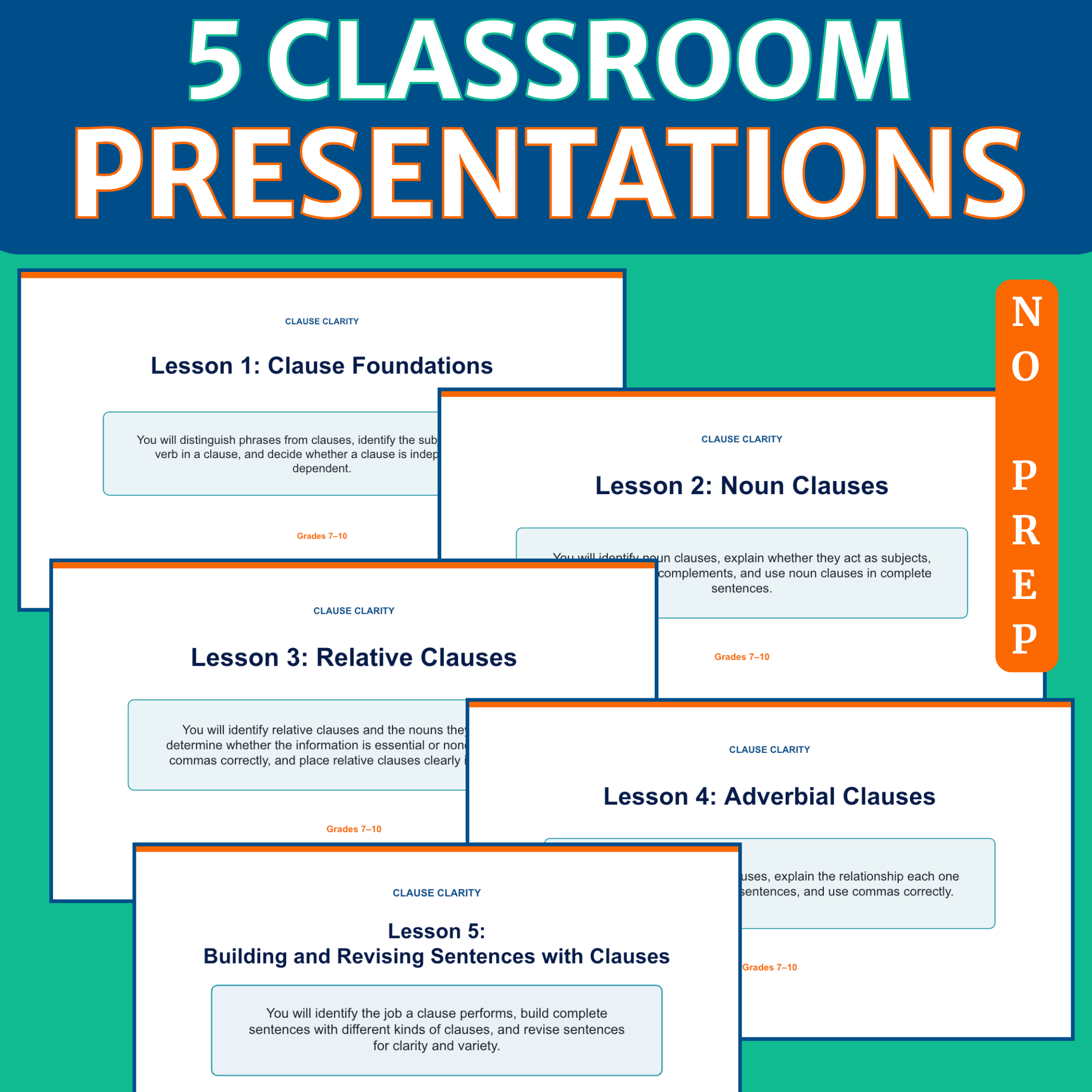
I organized Clause Clarity as five standalone lessons for Grades 7–10. The lessons cover clause foundations, noun clauses, relative clauses, adverbial clauses, and the use of clauses in sentence and paragraph revision. When taught in sequence, they move from identifying the basic parts of a clause to constructing, correcting, and revising sentences.
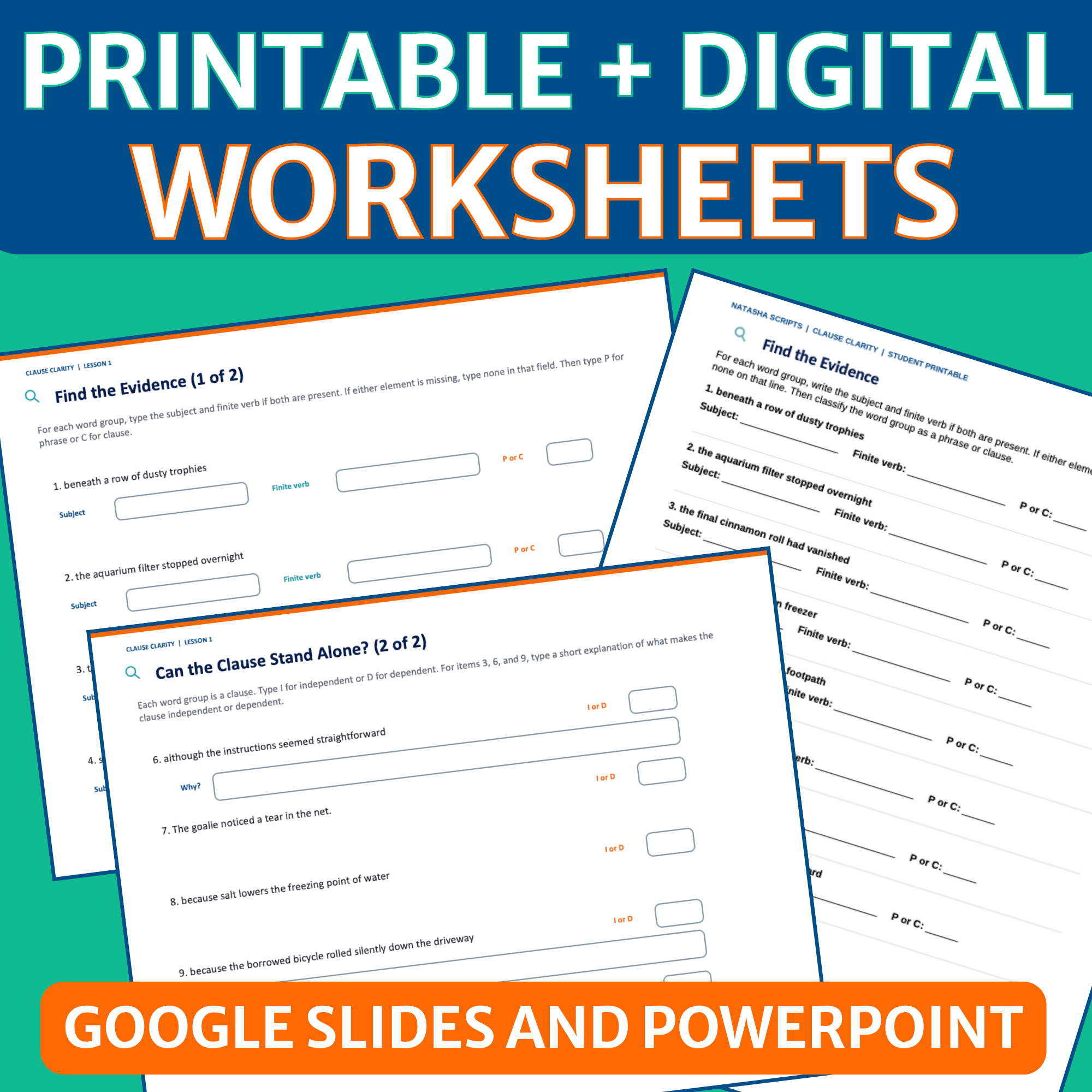
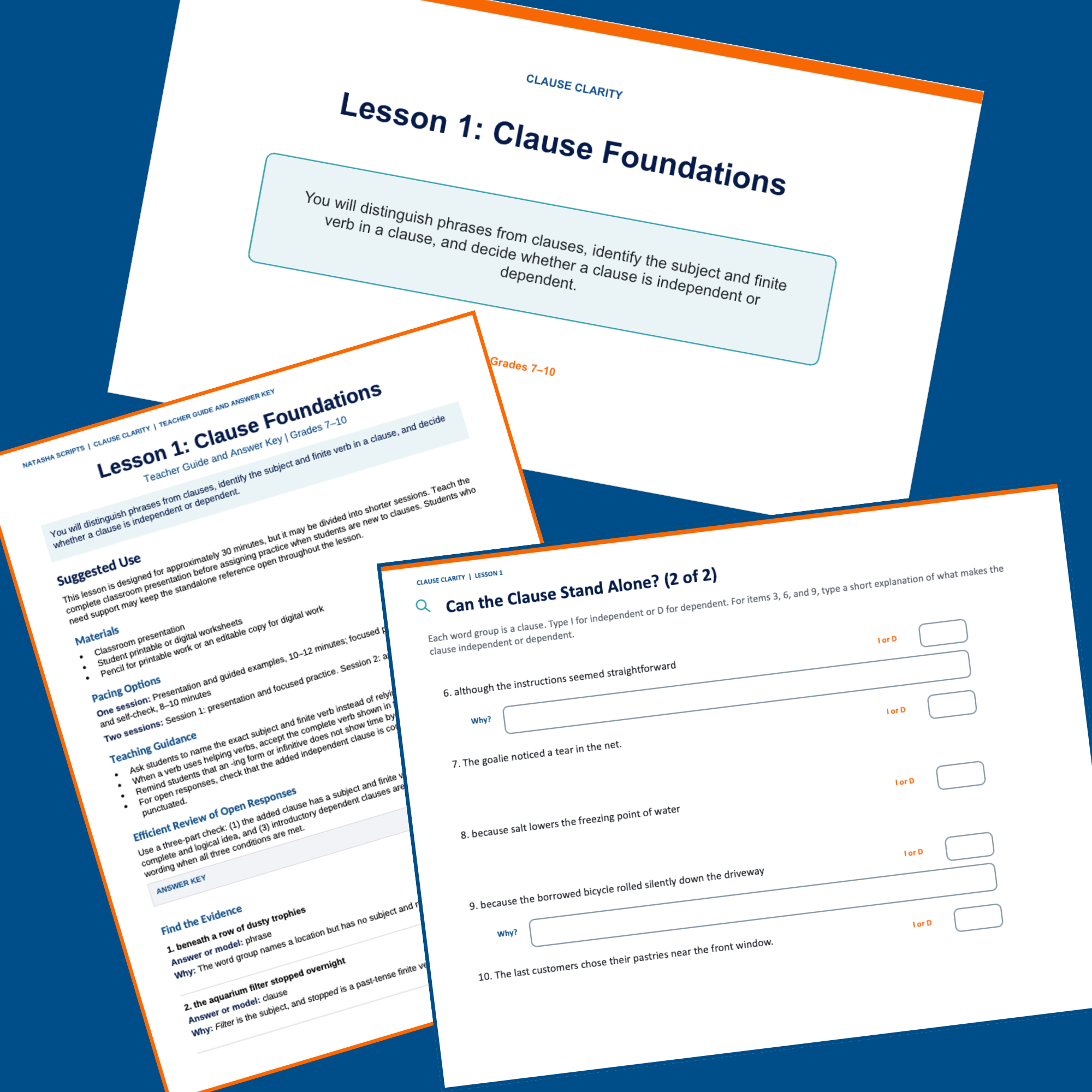
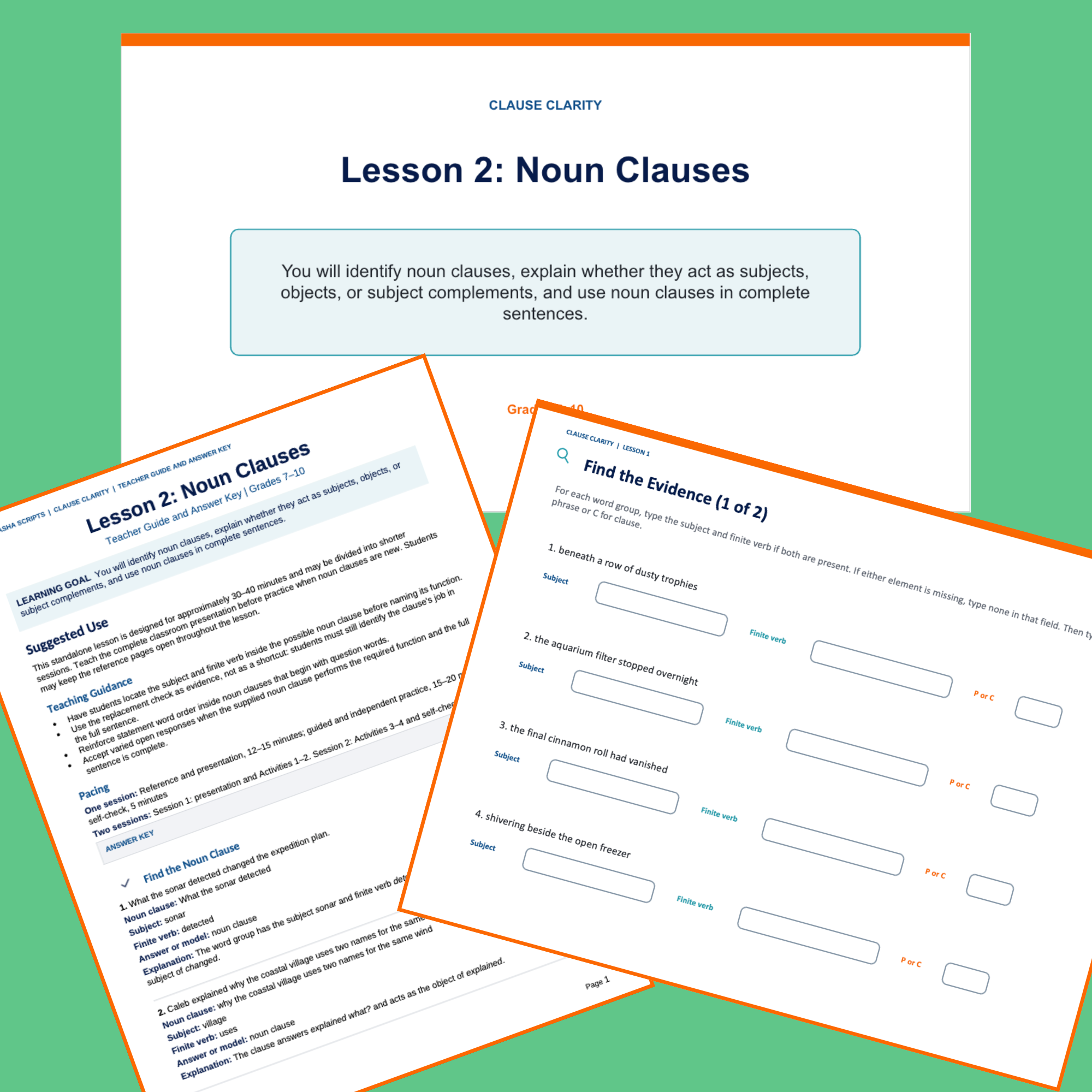
Each lesson begins with a clear explanation and modeled examples. Students then identify and analyze clauses before using the grammar in sentence writing or revision. Reference pages are included in the printable worksheets, and the digital worksheets contain reference slides that students can return to when they need help. This allows them to check a rule or example without having to search through material from an earlier lesson.
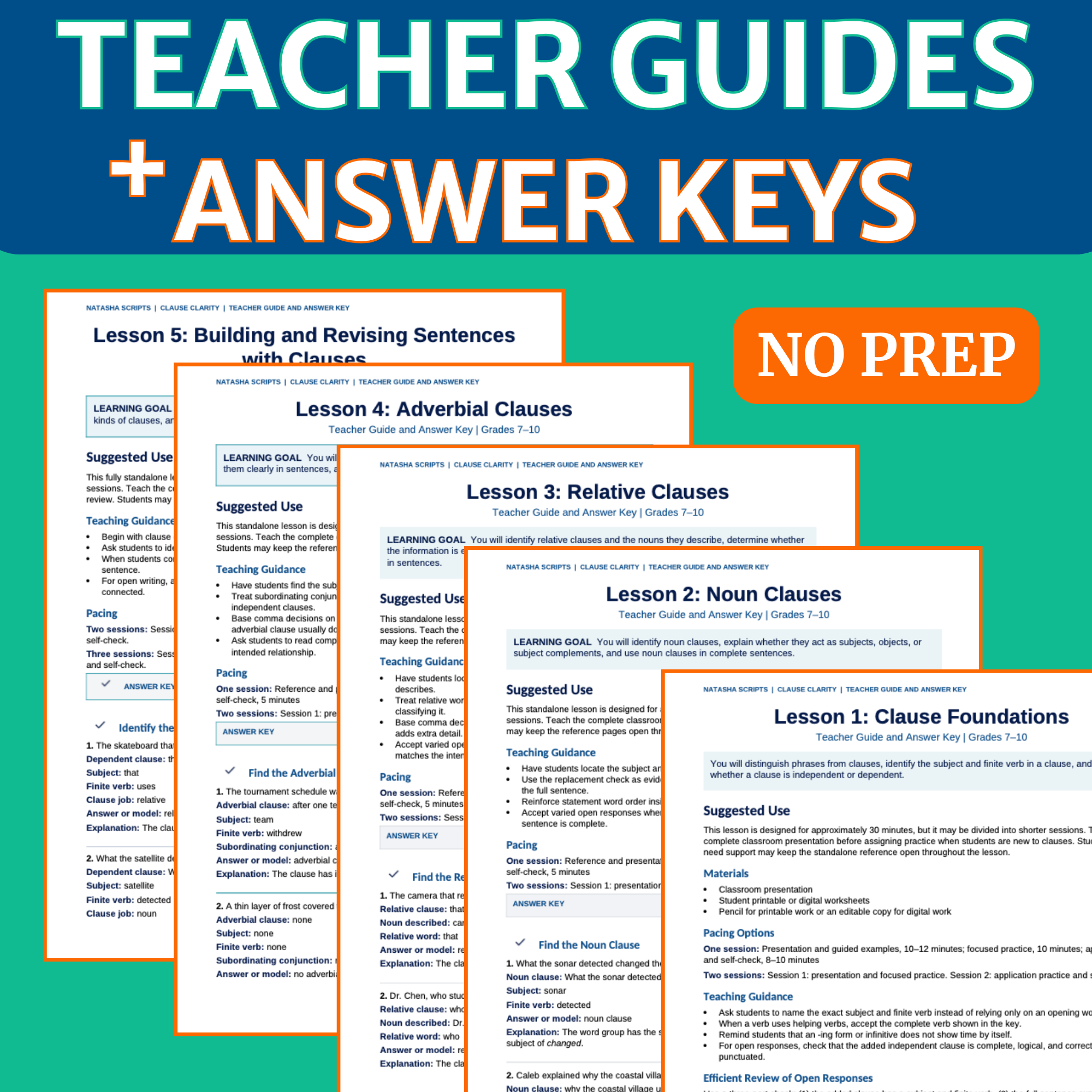
Teachers and homeschool parents can use the classroom presentation for direct instruction and then choose either the printable or digital version of the corresponding practice. The teacher materials include suggested pacing, guidance, answers, explanations, sample responses, and support for evaluating open-ended work.
The five lessons can be taught together as a clauses unit. They can also be used individually when a student needs help with a particular area, such as recognizing noun clauses, punctuating relative clauses, or repairing fragments that contain adverbial clauses. The necessary instruction and reference support are included within the selected lesson, so students can begin there without completing the earlier lessons first.
What Students Gain From Clause Instruction
Students need opportunities to use their knowledge of clauses beyond an identification exercise. When they can locate clause boundaries, recognize how clauses depend on or add to one another, and explain the relationship between ideas, they are better prepared to correct incomplete or confusing sentences.
This understanding also gives students more choices as writers. They can add relevant information, show time, reason, contrast, or condition, and vary the way their sentences begin. Teachers and homeschool parents can develop these skills through a short sequence of lessons or address one area when it appears in a student’s writing. In either case, clause instruction becomes most useful when students apply it while constructing sentences and revising paragraphs.
If you have any questions about Clause Clarity or would like to share feedback after using the lessons, please contact me at natasha@natashascripts.com.
