Why Spelling Practice Still Matters in Middle School
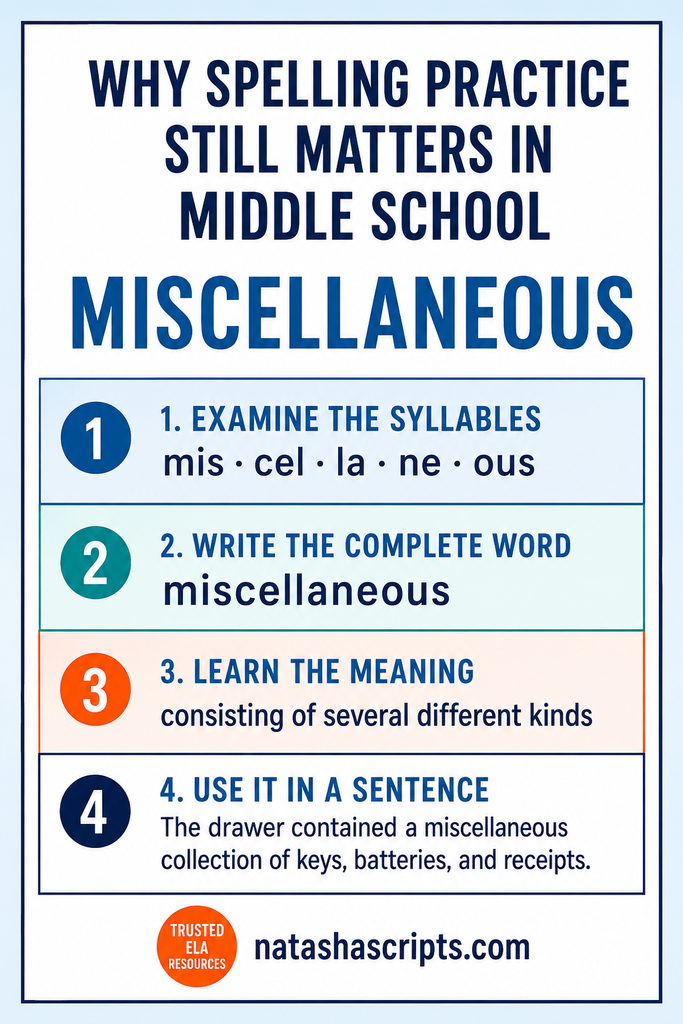
Middle school spelling practice often receives less attention as students move into more advanced reading and writing. At the same time, the words students encounter are becoming longer and more specialized. They meet new vocabulary in literature, science, history, and other subjects, and they are expected to use it accurately in essays, reports, and written responses.
From my teaching experience, I know that students benefit from having time to study unfamiliar words carefully. This is why I continue to write spelling books and workbooks for the middle school grades. In these resources, students examine the parts of a word, write its complete spelling, learn what it means, and use it in a sentence of their own. Each stage serves a different purpose, while the full sequence connects spelling practice with vocabulary and writing.
Why Syllables Still Help With Longer Words
Syllabification helps students separate and examine the spoken and written parts of a longer word. When they divide a word into syllables, they can listen for each part while looking carefully at the corresponding letters.
This is especially helpful when one section of the word is easy to miss or spell incorrectly. The student is no longer trying to hold the entire word in mind at once. Attention can be given to each syllable before the word is reconstructed.
I still value this practice in middle school because the words themselves have become more complex. Students may recognize a word when reading but remain uncertain about its internal structure when they need to write it. Dividing the word into syllables gives them a clear way to examine that structure.
From Syllables to the Complete Word
After working with the syllables, students need to bring them together and write the complete word. Whole-word practice reinforces the full sequence of letters and helps students notice how the parts fit together.
I combine syllable practice with whole-word writing for this reason. One asks students to separate the word and concentrate on its smaller parts. The other asks them to reconstruct it accurately. Writing the whole word several times can be useful when students remain attentive to the order of the letters and check each attempt carefully.
Accurate spelling, however, does not show that a student understands the word. A student may reproduce the letters correctly without knowing how the word is used. The next stage of practice needs to address meaning.
Spelling Practice Needs Meaning and Context
Definitions and model sentences provide the first explanation of a word’s meaning and use. The definition tells students what the word means, while the model sentence shows how it functions in context. This is particularly useful when a word can be understood more easily through an example than through a definition alone.
Synonym work extends that understanding. Looking for a related word requires students to consider meaning more carefully than a spelling-only exercise would. I also use word searches that include the target words and their synonyms. A word search gives students recognition practice, while the synonym element keeps their attention on meaning. It works as one part of the lesson alongside activities that require recall and written use.
Original sentence writing brings the different strands of the lesson together. Students must retrieve the spelling, remember the meaning, place the word in an appropriate context, and construct a grammatically complete sentence. Their sentence also reveals misunderstandings that may not appear in a copying or recognition activity. If the word has been spelled correctly but used inaccurately, the teacher or homeschool parent can address the meaning before the student moves on.
How I Use This Approach in the Three Workbooks
I used this sequence when creating my spelling practice workbooks for Grades 6, 7, and 8. All three combine syllabification, whole-word spelling, definitions, model sentences, synonym work, word searches, and original sentence writing. The activities vary slightly by grade, but the same teaching idea runs through the series: students should learn how a word is spelled, what it means, and how to use it.
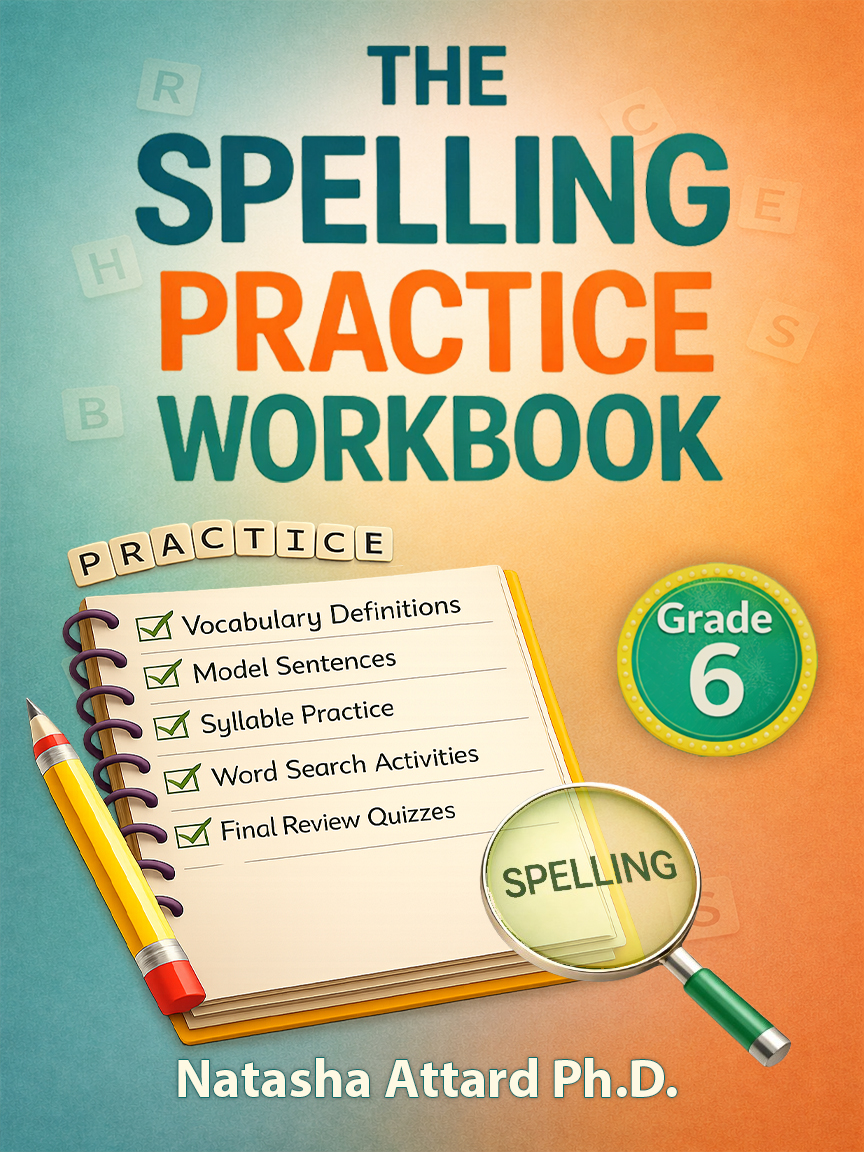
The Spelling Practice Workbook for 6th Grade contains twenty lessons with five words in each lesson, covering 100 words in total. Each lesson includes five spelling and vocabulary activities.
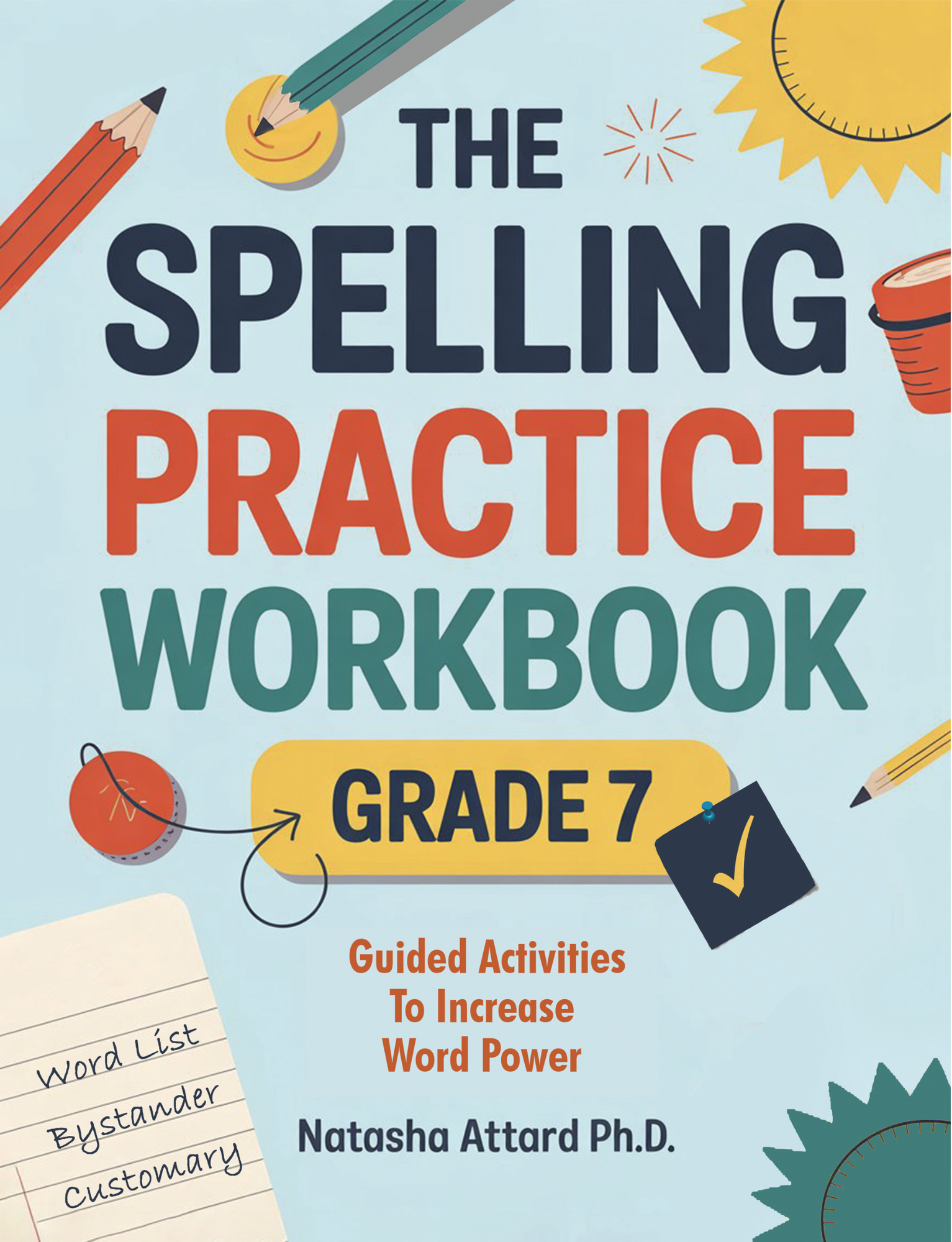
The Spelling Practice Workbook for 7th Grade also contains twenty lessons. Students work with six words and four practice exercises in each lesson, covering 120 words across the book.
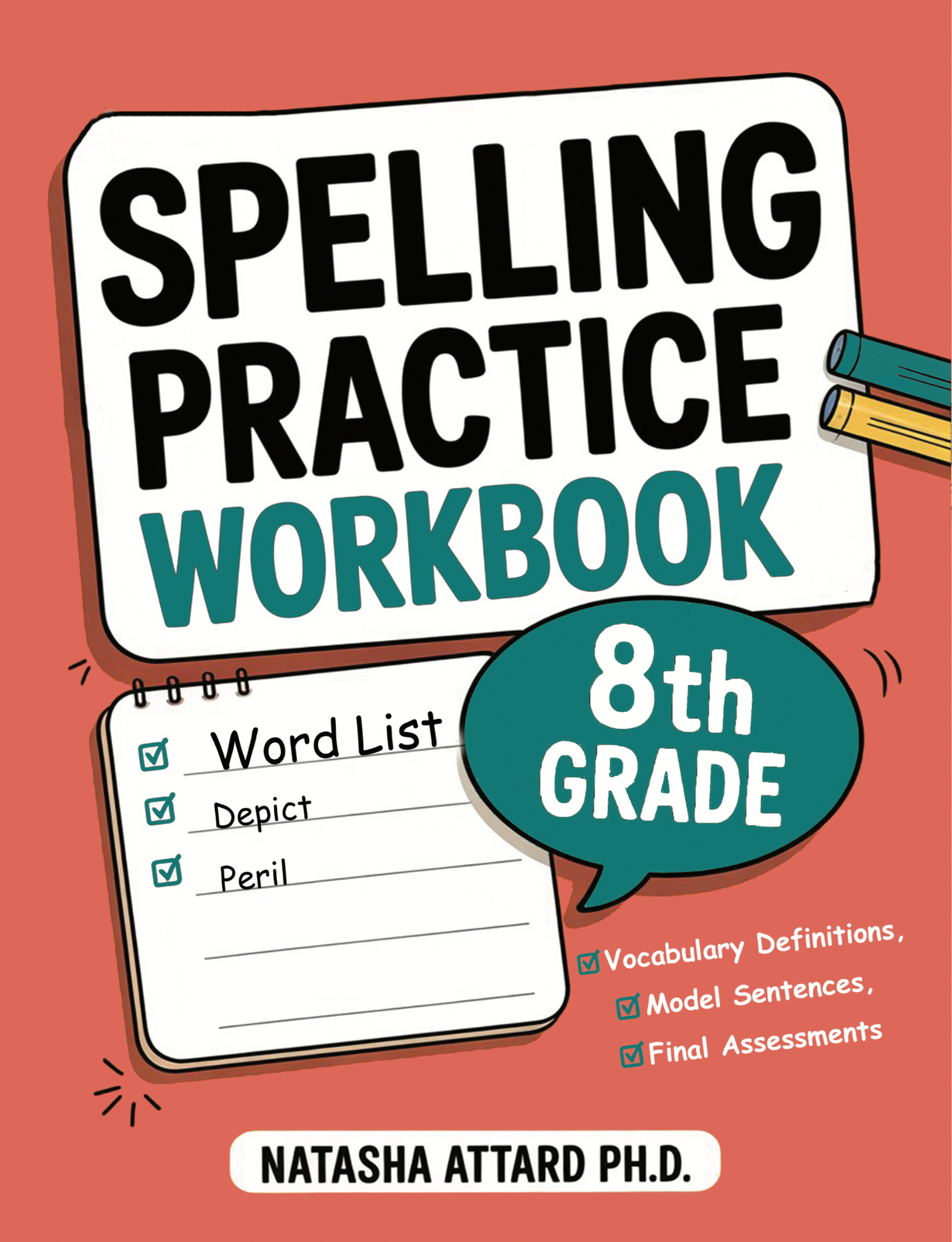
In the Spelling Practice Workbook for 8th Grade , twenty lessons introduce five words at a time, for a total of 100 words. Spelling, vocabulary, sentence writing, lesson notes, and assessment activities are included throughout the book.
Fitting Spelling Into the Middle School Week
Spelling practice does not need to occupy a large part of the ELA schedule. Teachers and homeschool parents may use one short activity each day or complete a full lesson during a longer weekly session. The lesson can also be divided according to its focus: syllables and whole-word writing first, followed by meaning, synonyms, and sentence application.
A regular routine gives students repeated opportunities to examine, write, and use new words. This allows spelling to support the vocabulary and writing work students are already completing across the middle school curriculum.
